

Monsoon moisture takes a little out of the drought, water watchers say
The early arrival of summer monsoons in late June has been a welcome sight for a parched state, but the rains have not been enough to put an end to the drought.
Colorado water watchers from federal and state agencies and local water providers, known as the Water Availability Task Force, couldn’t have been happier as they looked over the numbers from the last 30 days. Precipitation has been well above normal in that period, and it’s put the state near average for the entire water year. In the 23rd year of a drought, near average precipitation is considered very good news.
But high temperatures in July — the fifth hottest on record for Colorado — dampened some of the progress the monsoons could have made in refilling reservoirs or improving soil conditions. That heat compounded the problems caused by a warm and windy spring, which accelerated snowmelt, in some places weeks earlier than usual.
Russ Schumacher, the state climatologist with the Colorado Climate Center at Colorado State University, pointed out that those warm July nights had one positive: lots of humidity and cloud cover, which reduced evaporative demand, the loss of water from surfaces caused by high temperatures and wind speed, low humidity and lack of cloud cover.
The outlook for the next couple of weeks is for less heat and more moisture, though Schumacher also pointed out that “La Niña” – the weather pattern that has aggravated the drought over the last two years – could be headed into a third winter. La Niña patterns, which don’t usually last more than a year or two, result in warmer conditions and less winter precipitation. Schumacher said the pattern is expected to persist during the fall but could weaken this winter.
Day-to-day drought conditions have improved significantly in the past three months, according to the U.S. Drought Monitor. In mid-May, the entire state was in some form of drought, with 62% of the state in moderate to extreme drought. As of last week, 58% of the state is in those same levels of drought, but there’s pockets around the state that are out of drought entirely, primarily in the north central mountains and in the western half of the San Luis Valley. But drought is worsening in northeastern and southeastern Colorado, Schumacher noted.


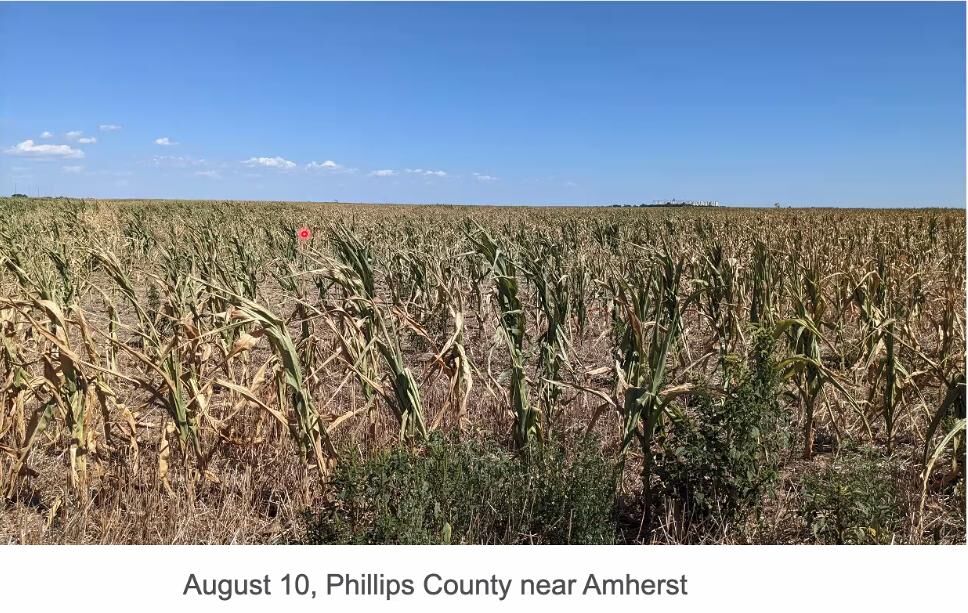
Some pockets of the state are still experiencing the worst of it. Baca, Sedgwick and Phillips counties on the Eastern Plains have so far missed out on those monsoons, and the economic consequences have been severe. Schumacher showed a photo he’d taken in northeastern Colorado of burned corn crops. Farmers are no longer desperate for water, he said. They’re more like “resigned” that the corn crop isn’t coming back and holding out hope for enough moisture to plant wheat in the next two months, according to Cindy Lair of the state Department of Agriculture.
Reservoir storage shows the effect of the lingering drought, and nowhere is that more obvious than in the Gunnison River basin, which holds the state’s largest reservoir, Blue Mesa. That reservoir was tapped late last year in hopes of keeping water levels at Lake Powell from dropping to critical lows. Even with the monsoons, Blue Mesa is now at just 44% of capacity, according Aug. 9 numbers from the Bureau of Reclamation.
Southwestern Colorado, the basin that includes the San Miguel, Dolores, Animas and San Juan rivers, are seeing some of the lowest overall levels in the state. Navajo Reservoir, which also was tapped last year to help out at Lake Powell, is at 65% of capacity.
Reservoirs on the Colorado River basin and the South Platte tell a better tale: They are at capacity or nearly so, according to Schumacher’s presentation.


Aurora seats new progressive council
Kyla Pearce
kyla.pearce@gazette.com
Updated 3 hours ago
Aurora’s four new councilmembers and an incumbent were sworn in Monday night, marking the beginning of a progressive-majority council rule in the city that has been led by conservatives for years. “This is what democracy looks like,” new at-large member...

Dean alleges firing over opposition to book ban in Elizabeth School District
Deborah Grigsby
deborah.smith@denvergazette.com
Updated 6 hours ago
A former Elizabeth Middle School dean of students has filed a lawsuit in federal court alleging she was terminated because of her opposition to the district’s book ban policy and her advocacy against “racism” in the school. On Nov. 30,...

Heading into holidays, shoplifting on the rise in Colorado, study says
Mark Samuelson Special to The Denver Gazette
mark.samuelson@denvergazette.com
Updated 7 hours ago
Shoplifting and other forms of retail crime are seeing a sharp rise as Colorado heads into the holidays, according to a study. After falling from a recent-record 24,975 thefts reported in 2015 to around 18,000 in 2021, Colorado Bureau of...

Funeral for Sen. Faith Winter will be held Friday at the Colorado Capitol
Marianne Goodland
marianne.goodland@coloradopolitics.com
Updated 7 hours ago
Colorado Sen. Faith Winter will be remembered on Dec. 5 at 2 p.m. in a funeral service on the state Capitol’s west steps. A celebration of life reception will follow. Winter died on Wednesday, Nov. 26, in a three-vehicle accident...
10th Circuit rules Greeley officer unconstitutionally detained man standing outside home
Michael Karlik
michael.karlik@coloradopolitics.com
Updated 7 hours ago
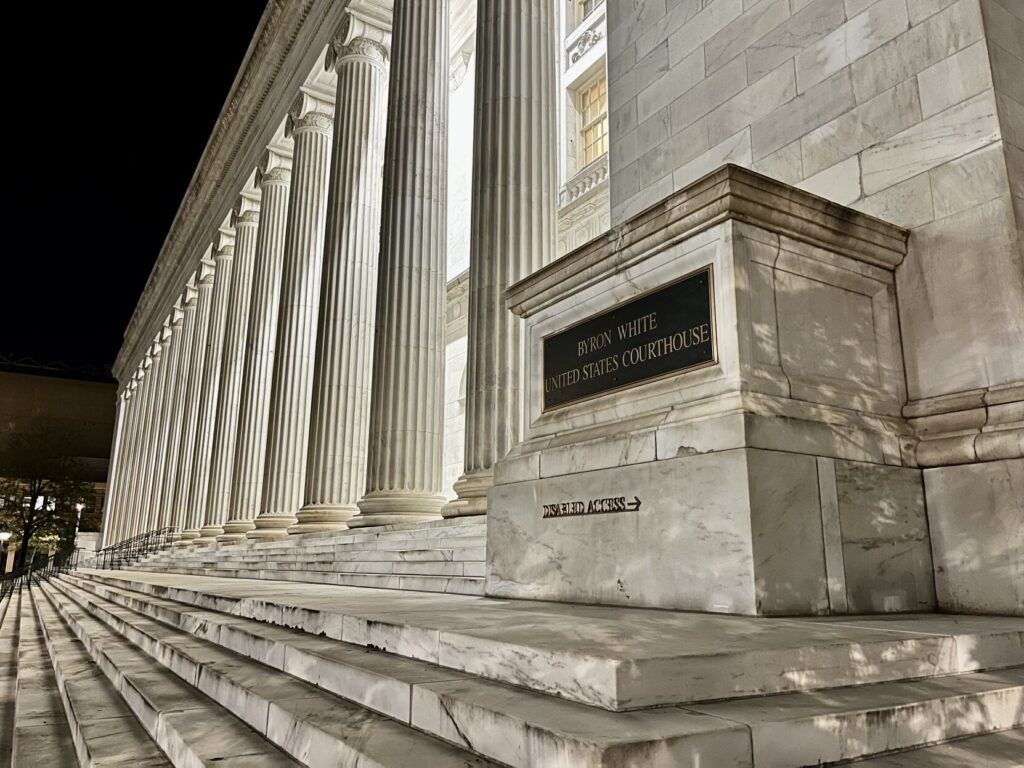
The Denver-based federal appeals court concluded last week that a Greeley police officer lacked reasonable suspicion to detain a man who was standing outside the door of a residence and not engaging in any indicators of criminal activity. A three-judge...

Copper Creek yearling wolf blamed for livestock death in Gunnison County
Marianne Goodland
marianne.goodland@coloradopolitics.com
Updated 8 hours ago
A heifer found dead in eastern Gunnison County on Nov. 22 was killed by one of the yearlings from the Copper Creek wolf pack, according to a rancher, who did not want to be identified. It’s the fourth livestock death...

‘Utterly no precedent’: Federal judge expresses concerns about Jeffco’s early appeal in jail death case
Michael Karlik
michael.karlik@coloradopolitics.com
Updated 7 hours ago
A federal judge shared his concerns on Monday about Jefferson County’s appeal of a routine procedural order in a constitutional rights case, which the plaintiffs argued could spawn appeal-related delays in countless lawsuits against the government. During a hearing, U.S....

Justice Hart’s absence continues, state Supreme Court hears oral arguments | COURT CRAWL
Michael Karlik
michael.karlik@coloradopolitics.com
Updated 11 hours ago
Welcome to Court Crawl, Colorado Politics’ roundup of news from the third branch of government. One member of the Colorado Supreme Court remains on an unusual leave of absence, plus the court heard oral arguments in eight more cases last...

Denver Art Museum gala honors treasured benefactors Kent and Vicki Logan | NONPROFIT REGISTER
Joanne Davidson Special to Colorado Politics
joanne-davidson-special-to-colorado-politics@coloradopolitics.com
Updated 11 hours ago
DENVER ART MUSEUM Denver News: Kent and Vicki Logan, who 25 years ago made the largest gift in the history of the Denver Art Museum’s modern and contemporary art department, were the honorees when the DAM hosted the 43rd edition of its...

Melania Trump debuts ‘Home Is Where The Heart Is’ as White House 2025 Christmas theme
Asher Notheis, Washington Examiner
asher.notheis.washington.examiner@gazetteedit.wpenginepowered.com
Updated 13 hours ago
First lady Melania Trump unveiled the White House’s Christmas theme on Monday, “Home Is Where The Heart Is,” to showcase the character of the United States. The first lady tasked designer Hervé Pierre to oversee the implementation of this year’s...