

Arrest affidavit describes how alleged election security breach took place in Mesa County
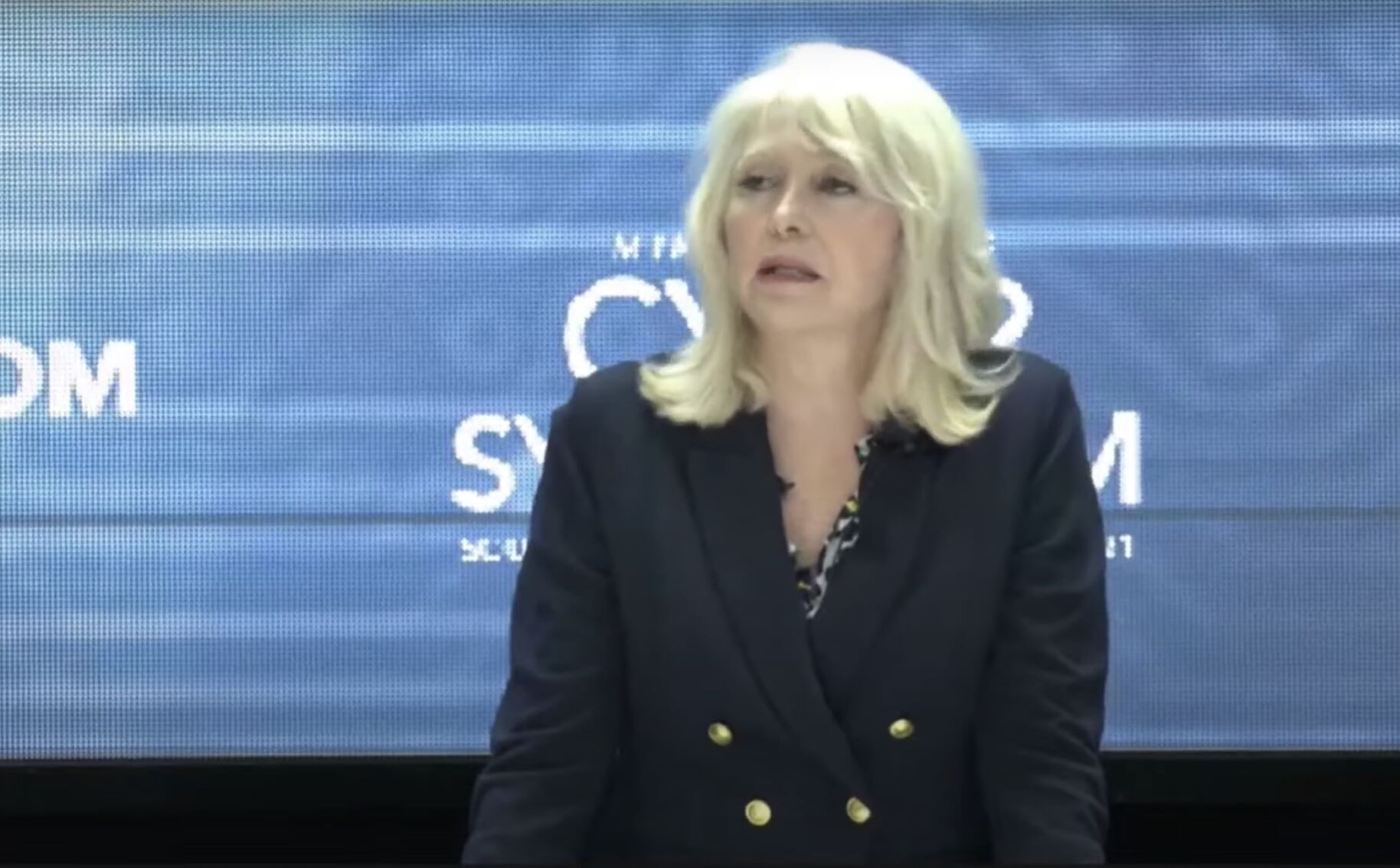
An arrest affidavit for former Mesa County Elections Manager Sandra Brown offers a comprehensive look at how the alleged election security breach took place in May 2021 and which has now led to criminal indictments of Brown, Mesa County Clerk and Recorder Tina Peters and Deputy Clerk Belinda Knisley.
The affidavit was filed on Monday by the 21st Judicial District and signed by investigator James Cannon. Brown’s arrest was first reported Tuesday by the Grand Junction Daily Sentinel.
It also shows how a Gerald Wood was dragged into the incident, and it names the unauthorized personnel who allegedly participated in copying the hard drive from the county’s Dominion Voting Systems elections equipment.
Brown was arrested Monday evening in Mesa County on two felony counts of conspiracy to commit criminal impersonation to gain a benefit and attempt to influence a public servant. The first carries a possible maximum sentence of 18 months in state prison and up to $100,000 in fines; the second carries a penalty of up to six years in state prison and up to $500,000 in fines. The charges against Brown are similar to some of the charges filed against Peters and Knisley.
Peters described the multiple state and federal investigations of her as politically motivated attempts to prevent her from exposing election system irregularities.
Brown was fired by Mesa County last November.
Mesa County fires employee tied to Tina Peters scandal
The affidavit alleged this is how the incident occurred:
- On April 16, 2021, Jessi Romero, the voting systems manager for the Secretary of State, contacted Brandi Bantz, the Mesa County elections director, to reject a request from Mesa County to allow members of the public to be present during a “trusted build” update of Mesa County election equipment. He reminded Bantz that only personnel from Dominion, the Secretary of State’s office, and county employees could be present. Romero also said the “trusted build” would be done under camera security.
- On April 23 Peters convened a meeting with Knisley, Bantz, Brown and Stephanie Wenholz, another elections manager. Someone secretly recorded that meeting on a cell phone and turned that recording over to investigators, the affidavit said. Also present: Sheronna Bishop, formerly the campaign manager for U.S. Rep. Lauren Boebert, R-Silt; Douglas Frank of Ohio and Maurice Emmer of Aspen. Emmer was identified in the affidavit as an associate of Bishop, Frank and MyPillow CEO Mike Lindell. None are employees of Mesa County. During that meeting, Frank claimed the voting equipment could be accessed remotely. Later in the discussion, Peters invited Frank to sit in on the “trusted build” scheduled for May 25-26. He declined but said he had a team who could do it. Bantz and Wenholz were then asked to leave the room.
- On May 13, Knisley sought an ID badge and county email address for Gerald Wood, telling the county’s human resources department he was a temporary hire for the elections department.
- On May 17, Knisley began the process to shut down the video surveillance of the tabulation room where the “trusted build” would take place. That same day, Wenholz was told she was being taken off the “trusted build” team. She was also told that Wood was a new administrative assistant for Brown. Wenholz, who does background checks on new employees, never met Wood, which was not standard protocol, according to the affidavit. Two days later, Wood was asked to turn in his ID badge to Knisley. He never worked for the county.
- On May 20, Bishop, using her personal credit card, booked a hotel room in Grand Junction for May 22 to May 26 for Conan James Hayes, a California surfer and apparel company owner who allegedly has been involved in activities in Arizona and Michigan relating to claims the 2020 elections were rigged.
- On May 23, records show key cards for Peters, Brown and Wood were used to enter the elections area. The affidavit said that, on that date, someone “unlawfully took a digital image of the entire Dominion hard drive for the specific purpose of analyzing the software and data” and that Peters “later publicly admitted to this act.” The “trusted build” took place on May 25 and May 26. Those present included Peters, the person identifying himself as Wood, and Brown, as well as personnel from Dominion and the Secretary of State’s office. Several individuals told the District Attorney’s investigator that the man identified as Wood was introduced to them as an administrative assistant.
- On May 26, Peters and Brown accessed the elections area past normal business hours. The affidavit said someone at that time took a second digital image of the Dominion hard drive. Hayes, who had already left, according to the affidavit, was sent a package by Peters, using county funds, on May 27.
In March, Peters and Knisley were both indicted by a Mesa County grand jury. In June, according to the affidavit, Knisley claimed Peters told her to lie to the county’s human resources department about Wood. The affidavit said that Peters told Knisley they had to protect the identify of the person who was coming in – who was not Wood – and that was why the cameras were turned off on May 17.
Knisley knew on May 19 when she took Wood’s badge that he was not going to be involved in the trusted build, the affidavit said, adding she never notified the Secretary of State’s office about Hayes. Knisley also confirmed that Brown would have known that Wood was not an employee, given that she did not have an administrative assistant, the affidavit said. Knisley also directed Brown to communicate with the Secretary of State’s office about Wood’s role, and Brown did so, the affidavit said.
“Knisley conceded that the keycard badge, ‘admin asst,’ using Gerald Wood’s identity, and the cameras being turned off was all part of the plan,” the affidavit said, adding “that was [their] goal to hide it from the SOS” regarding who was actually in the room for the “trusted build.”
The images of the Dominion hard drive, including its copyrighted software, are now publicly available online. “National platform media outlets and computer experts suggest that nefarious hackers may study the software files to attempt to find vulnerabilities to harm future elections,” the affidavit said.
Peters did not reply to a request for comment.


Colorado Supreme Court to hear case on ballot measure disclosure requirements
Marissa Ventrelli
marissa.ventrelli@coloradopolitics.com
Updated 2 days ago
The Colorado Supreme Court has agreed to hear a case challenging whether the state can require ballot measure committees to disclose the names of their registered agents in election communications. The case stems from a complaint filed during the 2020...
Democrat Jena Griswold lands EMILYs List endorsement in Colorado attorney general race
Ernest Luning
ernest.luning@coloradopolitics.com
Updated 2 days ago
EMILYs List, a national organization that works to elect pro-choice, Democratic women, this week endorsed Colorado Secretary of State Jena Griswold’s bid for attorney general in next year’s election. The 41-year-old Griswold, who is term-limited, was the first Democrat elected...
Colorado secretary of state refuses to hand over election records to DOJ
Marissa Ventrelli
marissa.ventrelli@coloradopolitics.com
Updated 2 days ago
Colorado will not comply with the U.S. Department of Justice’s request to share certain voter information, Secretary of State Jena Griswold said on Wednesday. Federal authorities have sought voter data from more than two dozen states, framing it as part...

Charles Johnson retains District 11 school board seat after election recount
Gazette Staff
gazette-staff@gazette.com
Updated 2 days ago
The order of finish for the last of three open seats on the Colorado Springs School District 11 Board of Education remained the same after a recount, according to figures released Thursday from the El Paso County Clerk and Recorder’s...
Income tax overhaul in Colorado clears first hurdle, as revised estimate puts tax hike at $4 billion
Marianne Goodland
marianne.goodland@coloradopolitics.com
Updated 3 days ago
A state panel on Wednesday gave the go-ahead to a ballot measure that seeks to change Colorado’s flat rate of 4.41% to a graduated income tax, beginning in 2027, and raise billions dollars in new revenue. Now the proponents of...
Colorado title board to review graduated income tax proposal for 2026 election
Marianne Goodland
marianne.goodland@coloradopolitics.com
Updated 5 days ago
The Secretary of State’s title board on Wednesday will review another attempt at a graduated income tax ballot measure for the 2026 general election. In October, the title board had rejected two proposals submitted by the Bell Policy Center because...
Palmer Lake could see three special elections next year
Savannah Eller
savannah-eller@coloradopolitics.com
Updated 6 days ago
Turmoil continues in the town of Palmer Lake, where a Board of Trustees with frequent turnover has been deadlocked on multiple issues for months. The next year could see the town settling its differences in as many as three special...

Colorado Springs D-11 board member running for state House seat
Eric Young
eric.young@gazette.com
Updated 1 week ago
A Colorado Springs District 11 board member has thrown their hat into the ring for a seat in the state House of Representatives. A candidate affidavit and committee registration form for Jill Haffley, vice president of D-11’s Board of Education,...

Campaign finance complaints add up for Bennet campaign
Marianne Goodland
marianne.goodland@coloradopolitics.com
Updated 1 week ago
Three state campaign finance complaints have been filed against U.S. Sen. Michael Bennet, D-Denver, tied to his campaign for governor in 2026. A fourth is likely, sources have told Colorado Politics. The first two were filed on Sept. 24 and...
Colorado’s Michael Bennet rode outrage over last government shutdown to presidential bid | TRAIL MIX
Ernest Luning
ernest.luning@coloradopolitics.com
Updated 2 weeks ago
Only weeks after the longest federal government shutdown in U.S. history ended with congressional Democrats’ demands to restore health care funding previously cut by Republicans left dangling, the high-stakes standoff that dominated political news for 43 days has already receded...
PREV
PREVIOUS

Army veteran, small business owner Andy Rougeot launches bid for Denver mayor
Andy Rougeot knows he’s an unconventional candidate for Denver’s next mayor, but that’s the point. “I’m running for mayor because I love this city,” the 33-year-old Army veteran and small business owner told Colorado Politics ahead of his campaign launch. “I love the opportunity I’ve enjoyed here, but the opportunity is being shut for far […]

Tina Peters seeks recount of June 28 Secretary of State primary
Mesa County Clerk and Recorder Tina Peters is seeking to challenge the results of the June 28 primary for the Republican nod for Secretary of State. Peters signed a notarized letter seeking a recount on July 12, according to information from the Mesa County District Attorney’s office. That letter was received by the Secretary of […]