

‘A mistake was made’: Calls grow louder to reverse 2019 law that lowered penalty for fentanyl possession

The deaths of five Commerce City residents, reportedly due to overdoses tied to fentanyl, prompted lawmakers on both sides of the aisle at the state Capitol to call for changes in state law Tuesday, with some calling the law that eased penalties for drug possession a “mistake.”
“Clearly a mistake was made” to lower the penalty for possession of up to four grams of fentanyl, and “we need to fix this,” said Sen. Barbara Kirkmeyer, R-Brighton.
Kirkmeyer is referring to the legislature’s action in 2019, when lawmakers reduced the charges for possession of up to four grams of schedule II drugs, which includes fentanyl, from a level four drug felony to a level one drug misdemeanor. Gov. Jared Polis signed House Bill 19-1263 into law on May 28 that year.
Kirkmeyer made the plea even as policymakers, including the governor, acknowledge that fentanyl is fueling deaths in Colorado and elsewhere in country but have yet to act to confront the crisis. No legislation has yet been filed specifically introduced to deal with fentanyl deaths.
The 2019 bill had bipartisan support; it was sponsored by Democrats Rep. Leslie Herod of Denver and Sen. Pete Lee of Colorado Springs, and by Republicans Rep. Shane Sandridge of Colorado Springs and Sen. Vicki Marble of Fort Collins.
The General Assembly was divided over the issue; the final 20-15 vote in the Senate included 10 Republicans and five Democrats voting against. The House was more united in its support, with only one Democrat, then-Rep. Bri Buentello of Pueblo, voting against it, along with 19 Republicans. Four Republicans voted in favor of the bill.
During the bill’s passage, district attorneys representing multiple judicial districts asked that fentanyl be excluded from the bill, but those pleas failed to persuade the bill’s sponsors.
Kirkmeyer on Tuesday told the Senate that lawmakers made a mistake and should fix it. She said the deaths of the five Commerce City residents is a call to action, arguing that “would be enough for all of us to realize that there are times when the legislature just gets it wrong.” Kirkmeyer noted she wasn’t in the legislature in 2019, but the bill was sponsored by her predecessor.
Just 2 milligrams of fentanyl can kill, and so can the vapor, she said.
Four grams are enough to kill thousands of people, and since 2019, Colorado has moved up to No. 2 where fentanyl deaths have increased the fastest in the nation, according to Kirkmeyer. The state went from 147 deaths in 2019 to 709 in 2021, a 382% increase, Kirkmeyer noted.
“Clearly we don’t want to become number one,” she said.
Kirkmeyer asked that lawmakers put party affiliation aside and admit that well-intentioned reforms sometimes bring about disastrous consequences.
The Denver Police Chief “called us out, and rightfully so,” Kirkmeyer said, referring to a Monday CBS 4 report, in which Police Chief Paul Pazen said the “effort was to help people” but the “result is that people are dying.”
“I call on my fellow legislators, on the leadership, to approve a late bill,” Kirkmeyer said, adding she would co-sponsor such a measure to demonstrate bipartisan support and fix what she called “this terrible wrong.”
House Speaker Alec Garnett of Denver told reporters Tuesday he is working on a comprehensive solution, although he declined to be more specific on the legislation.
“Fentanyl is the most dangerous substance that man has ever created; it’s not really a drug, it’s like toxin … that poisons people,” he said. “It’s definitely something I’m working with law enforcement and with public health officials to try to get right.”
He said the problem is that while harm reduction saves lives, fentanyl is so addictive that it’s used several times a day, making harm reduction less effective. Small doses can do huge damage, and the most important action is to get those who are peddling it off the streets, Garnett added.
Calls from outside the General Assembly have been growing for months.
Sheriffs, police chiefs, district attorneys, Attorney General Phil Weiser and even Polis, who signed the 2019 bill, are calling for changes in the law. Polis reiterated his call in his 2022 State of the State address “to strengthen penalties for drug dealers peddling fentanyl in our communities.”
Weiser told the Denver Gazette last week that he wanted to tighten felony laws around fentanyl possession, reiterating a position he took publicly in December. He deferred when asked what amount of fentanyl should qualify for a felony charge, but he said 4 grams – the current level – “is not a plausible use for your own personal addiction.”
He said he also supports a sentencing enhancement for people who distribute fentanyl to users who later die.
Polis reiterated his call for harsher penalties for drug peddling in a statement sent to Colorado Politics.
“Fentanyl is devastating our communities,” Conor Cahill, the governor’s spokesman, said. “Governor Polis believes the General Assembly needs to act on a comprehensive approach to address the dangers of fentanyl including increased criminal penalties. While there is no guarantee that increased criminal penalties would have prevented this tragedy, we clearly need real consequences and harsher sentences for those involved with dealing or possessing enough fentanyl to kill people. This drug is unlike any our country has seen before, people are taking it without even realizing they are doing so, which is why we urgently need comprehensive solutions that includes harsher penalties and also addresses the unique nature of this crisis and to do more to bring awareness to the problem.”
Michael Allen, the attorney for the 4th Judicial District in Colorado Springs, also appealed for immediate state action on Tuesday.
“The only people that can fix this are the governor and those elected to the Colorado legislature,” he said in a statement. “I can tell you that cartels will continue to take advantage of the weaknesses in our laws until those in power get serious about closing the loopholes.”
He added: “The first step should be increasing the penalty for possession of fentanyl back to a felony because as little as 2 mg of fentanyl can be deadly. The second step should be including a sentencing enhancer that includes a mandatory prison sentence for those who distribute fentanyl that leads to an overdose death. Finally, let us not forget the importance of treatment.”
Denver Gazette reporter Seth Klamann contributed to this report.
Editor’s note: The headline and this story have been modified to say the 2019 law lowered the penalty for, instead of decriminalize, possession of schedule II drugs.


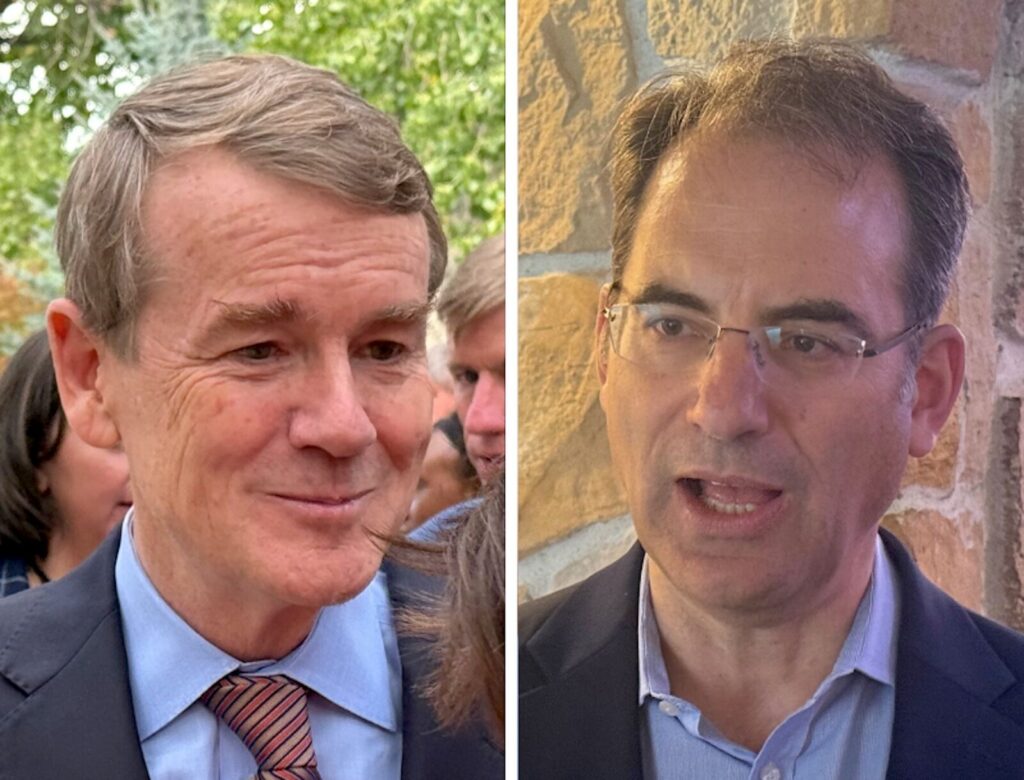
Clash of the titans: Democratic race for governor pits two candidates similar in focus, but very different in style | Vince Bzdek
Vince Bzdek
vince.bzdek@gazette.com
Updated 2 hours ago
By Vince Bzdek The race for governor is shaping up to be a clash of Democratic titans, U.S. Sen. Michael Bennet and Attorney General Phil Weiser. They are two of Colorado’s highest profile politicians with deep track records who...

Calendar Dec. 8-14
Rachael Wright
rachael.wright@coloradopolitics.com
Updated 3 days ago
CoPo’s weekly political calendar will help you find political and public-policy events throughout Colorado. It includes candidate and issue campaign events, public policy meetings, court hearings, state and local party conventions, assemblies, debates, rallies, parades, speaking engagements, traveling dignitary appearances,...
GOP chair candidates circle Benson, statehouse candidate alleges SOS voter fraud | A LOOK BACK
Rachael Wright
rachael.wright@coloradopolitics.com
Updated 3 days ago
Thirty-Five Years Ago This Week: Although Colorado Republican Party Chairman Bruce Benson had told one of his predecessors that he hadn’t yet made up his mind as to whether he’d run for a third term, party insiders had already begun...
Dear Abby: A better answer to your question | SONDERMANN
Eric Sondermann
eric-sondermann@coloradopolitics.com
Updated 1 day ago
It was the beginning of October. I had been invited to speak to a class on political journalism at Colorado College, my old alma mater. The class was taught by none other than Vince Bzdek, the editor-in-chief of this paper...

Federal judge declines to order Denver to let police critic apply for review board
Michael Karlik
michael.karlik@coloradopolitics.com
Updated 6 hours ago
A federal judge declined on Friday to order that Denver permit a longtime police critic to apply to join the board tasked with reviewing officers’ use of force. Regan Benson sought to become one of the two community members on...
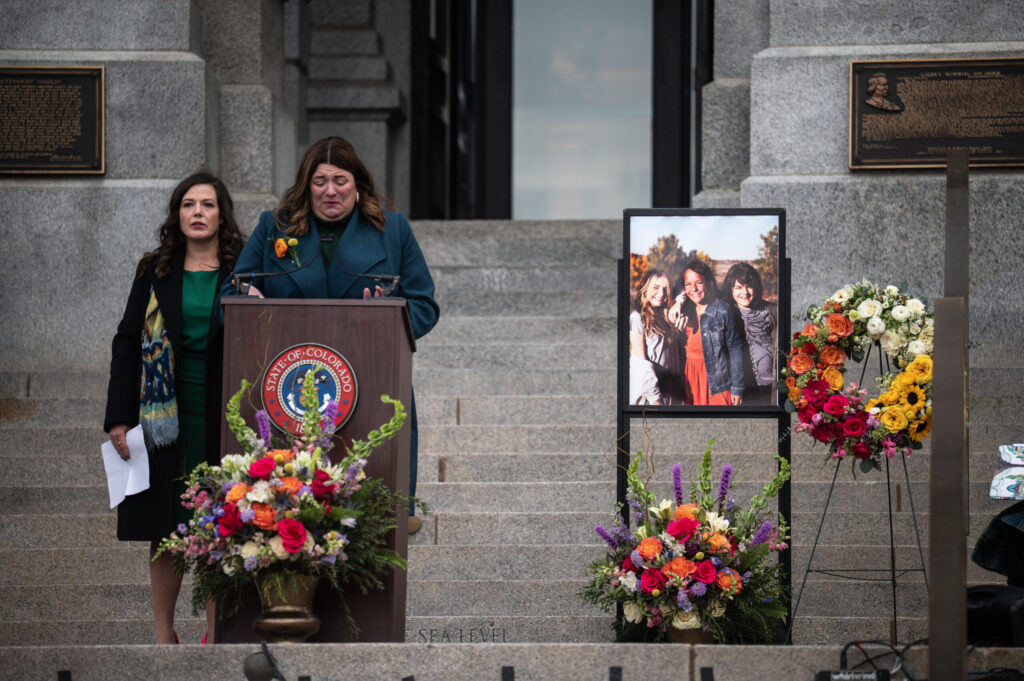
Flags lowered, colors raised: Colorado leaders and friends celebrate Sen. Faith Winter’s life
Marianne Goodland
marianne.goodland@coloradopolitics.com
Updated 1 day ago
It was the colors that stood out as hundreds braved the cold on Friday to celebrate the life of Sen. Faith Winter, who died in a two-car crash on Nov. 26. Flags at the state Capitol flew at half-staff at...
Colorado Supreme Court to hear case on ballot measure disclosure requirements
Marissa Ventrelli
marissa.ventrelli@coloradopolitics.com
Updated 1 day ago
The Colorado Supreme Court has agreed to hear a case challenging whether the state can require ballot measure committees to disclose the names of their registered agents in election communications. The case stems from a complaint filed during the 2020...
Divided 10th Circuit orders pretrial release of defendant facing drug charges
Michael Karlik
michael.karlik@coloradopolitics.com
Updated 23 hours ago
The Denver-based federal appeals court overturned a judge’s order keeping a defendant in custody pending trial on Friday, ruling 2-1 that she was entitled to release under the law. Erika Esmeralda Garcia stands accused of two charges related to the...
Trump finally gets his peace prize as FIFA hands him inaugural award at World Cup draw
Christian Datoc and Mabinty Quarshie, Washington Examiner
christian.datoc.and.mabinty.quarshie.washington.examiner@gazetteedit.wpenginepowered.com
Updated 1 day ago
President Donald Trump has long said he is unbothered by being snubbed for a Nobel Peace Prize. However, that did not stop his friend and FIFA President Gianni Infantino from handing him an award and a medal on Friday, seemingly created just...
Outgoing CPW director Jeff Davis lands new role, same salary amid Colorado hiring freeze
Marianne Goodland
marianne.goodland@coloradopolitics.com
Updated 24 hours ago
Jeff Davis, who resigned as director of Colorado Parks and Wildlife late last month, will continue to receive the same salary in his new role as a senior policy adviser to the Department of Natural Resources, according to the department....
PREV
PREVIOUS

Colorado Senate bids farewell to Leroy Garcia, elects new leader unanimously
The Colorado state Senate Tuesday unanimously elected Senate Majority Leader Steve Fenberg of Boulder as its next president for the remaining 78 days of the 2022 session. Fenberg replaces Sen. Leroy Garcia of Pueblo, whose resignation from the Senate becomes official at midnight tonight. Garcia will become special assistant to the assistant secretary of the Navy […]
Appeals court overturns conviction after video evidence contradicted security guard's testimony
Store surveillance footage directly contradicted testimony that a man used force in his attempt to rob a Weld County supermarket, prompting the state’s second-highest court to overturn his conviction. A three-judge panel for the Court of Appeals determined that witness testimony cannot sustain a conviction when undisputed video evidence invalidates what the witness said. As […]