

Court recommends tossing lawsuit against AG Weiser for alleged Facebook blocking

Attorney General Phil Weiser cannot be sued for a First Amendment violation for allegedly deleting comments and banning a man from his Facebook pages, a federal magistrate judge has recommended.
Neither the U.S. Supreme Court nor the federal appeals court in Colorado has established that public officials may be held liable for similar conduct, U.S. Magistrate Judge Kathleen M. Tafoya wrote last week. Therefore, Weiser would not have been on notice that his alleged actions nearly three years ago amounted to a constitutional violation.
“By March 2019, a few district courts had also considered the issue, but the decisions, which reached contrary conclusions, clearly do not form a consensus,” wrote Tafoya.
The lawsuit from Delbert Sgaggio of Colorado Springs, who identified himself as a journalist who is against white supremacy, claimed Weiser deleted various derogatory comments Sgaggio made on the attorney general’s Facebook page around March 22, 2019. The comments consisted of text, images or memes, including one of Weiser standing with a group of schoolchildren and captioned, “I’m going to put all these little dirty minorities in jail with my gun laws.”
“I was banned on his personal page. My comments on Phil Weiser’s personal page were free speech/ redress of the government, Free expression and journalism,” wrote Sgaggio, who is representing himself in the lawsuit. “One could compare my use of memes to that of satire or political cartoons. My Memes are Artistic creations to fight Tyranny.”
There is not yet a clear pathway for challenging a public official’s actions to block users or delete comments on social media. The U.S. Supreme Court last year declined to weigh in on whether former President Donald Trump violated the First Amendment when he engaged in similar behavior on Twitter. Although the U.S. Court of Appeals for the Second Circuit, based in New York, sided against him, the justices tossed the case as moot because Trump was no longer president.
In cases involving legislators, the St. Louis-based appeals court sided with a state representative who blocked a constituent on her Twitter account, reasoning it was “more akin to a campaign newsletter than to anything else.” Meanwhile, in Colorado, a federal judge was dubious of claims that U.S. Rep. Lauren Boebert had acted unconstitutionally when she blocked a constituent from her personal, not her governmental, Twitter account.
While those legal challenges did not pertain to the decisions of Facebook or Twitter themselves to ban users, U.S. Supreme Court Justice Clarence Thomas, in a statement attached to the order to dismiss the Trump lawsuit, indicated the unilateral power of social media platforms will also be a subject for courts to grapple with.
Some online comments are not protected by the First Amendment, such as genuine threats or incitements to break the law. There is also a possibility for a government entity or official to limit the topics discussed on their page.
“If social media is used by a public official to conduct government business, blocking members of the public from seeing the site or from posting comments may violate the First Amendment,” the ACLU of Massachusetts advises. “Blocking people from a site used for government business because of the views they hold or express is particularly likely to violate the First Amendment. But the mere fact that a government official is using a social media site does not mean it is being used for government business or that the First Amendment applies.”
Sara R. Neel, senior staff attorney for the ACLU of Colorado, said she hears about other people who face similar social media bans from government officials all the way down to mayors and council members.
“It would be good to get a ruling that sets the standards as to where the First Amendment applies and why,” she said.
In Sgaggio’s lawsuit against Weiser, the key question was whether he was entitled to qualified immunity at the outset. Qualified immunity shields government officials from civil liability unless they violate a clearly-established legal right. Generally, courts look to prior appellate decisions in similar cases to determine whether a right is clearly established.
Tafoya determined that of Weiser’s three Facebook pages – a personal one, a candidate one and his attorney general page – only the latter implicated the First Amendment. Just because Weiser was an elected official, the magistrate judge reasoned, that did not transform his nongovernmental pages into public forums.
At the time Weiser allegedly removed Sgaggio’s posts in early 2019, only the U.S. Court of Appeals for the Fourth Circuit, based in Richmond, Va., had determined that an elected official’s Facebook page was a public forum, and that the official had engaged in viewpoint discrimination when blocking a user. That one case, concluded Tafoya, “is not sufficient to meet the high bar of putting every reasonable official on notice that such conduct is unlawful.”
Jessica J. Smith, a First Amendment attorney with Holland & Hart, said that although courts have reviewed additional social media cases in recent years, “I’m not sure I’d go so far as to say that qualified immunity will soon cease to exist in this context. Qualified immunity is a very powerful doctrine.”
Both parties have 14 days to raise objections about Tafoya’s recommendation to U.S. District Court Chief Judge Philip A. Brimmer, who will then adopt or reject the findings. Sgaggio also filed lawsuits against Sen. Julie Gonzales, D-Denver, and Douglas County Sheriff Tony Spurlock alleging similar takedowns of his social media replies.
The case is Sgaggio v. Weiser et al.


Federal judge declines to order Denver to let police critic apply for review board
Michael Karlik
michael.karlik@coloradopolitics.com
Updated 3 hours ago
A federal judge declined on Friday to order that Denver permit a longtime police critic to apply to join the board tasked with reviewing officers’ use of force. Regan Benson sought to become one of the two community members on...
Colorado Supreme Court to hear case on ballot measure disclosure requirements
Marissa Ventrelli
marissa.ventrelli@coloradopolitics.com
Updated 2 days ago
The Colorado Supreme Court has agreed to hear a case challenging whether the state can require ballot measure committees to disclose the names of their registered agents in election communications. The case stems from a complaint filed during the 2020...
Divided 10th Circuit orders pretrial release of defendant facing drug charges
Michael Karlik
michael.karlik@coloradopolitics.com
Updated 2 days ago
The Denver-based federal appeals court overturned a judge’s order keeping a defendant in custody pending trial on Friday, ruling 2-1 that she was entitled to release under the law. Erika Esmeralda Garcia stands accused of two charges related to the...
Judge denies motion from Gov. Jared Polis to dismiss ICE lawsuit from former state employee
Marianne Goodland
marianne.goodland@coloradopolitics.com
Updated 3 days ago
A Denver District Court judge has denied a request by Gov. Jared Polis to dismiss a lawsuit filed by a former state employee over disclosure of information to federal immigration authorities. The lawsuit filed against the governor by Scott Moss,...

Colorado High School Activities Association reaches settlement with D-49, other school districts in trans athletics lawsuit
Eric Young
eric.young@gazette.com
Updated 2 days ago
Months after adopting new policies restricting students to athletic participation based on their biological sex and filing a federal lawsuit, School District 49 and other Colorado school districts have reached a settlement with the Colorado High School Activities Association (CHSAA)...
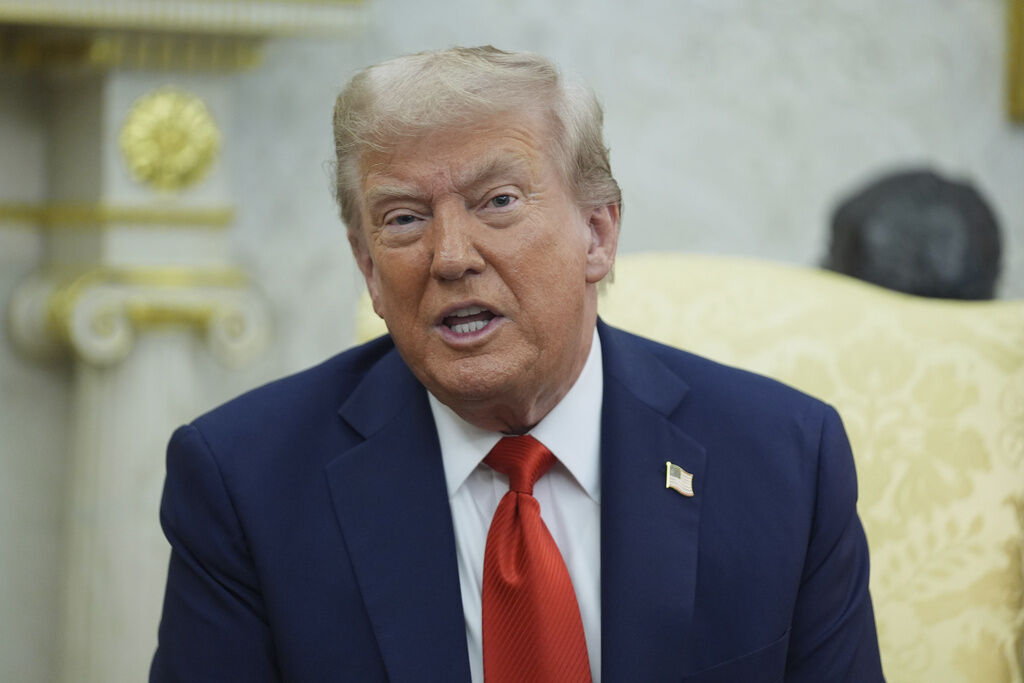
Trump calls Jared Polis a ‘sleazebag’ for keeping ‘elderly woman’ Tina Peters in jail, governor responds
The Washington Examiner
the-washington-examiner@coloradopolitics.com
Updated 3 days ago
President Donald Trump took to Truth Social on Wednesday to lambast Colorado Gov. Jared Polis over the case involving former Mesa County Clerk Tina Peters, who was sentenced to nine years in prison in 2024 for charges of giving unauthorized...

Federal judge recommends sanctions on plaintiffs for faulty case citations
Michael Karlik
michael.karlik@coloradopolitics.com
Updated 3 hours ago
A federal judge recommended that a pair of self-represented plaintiffs be subject to a range of sanctions for including flawed and non-existent case citations in their filings, potentially by using artificial intelligence. “A federal court is not a workshop for...
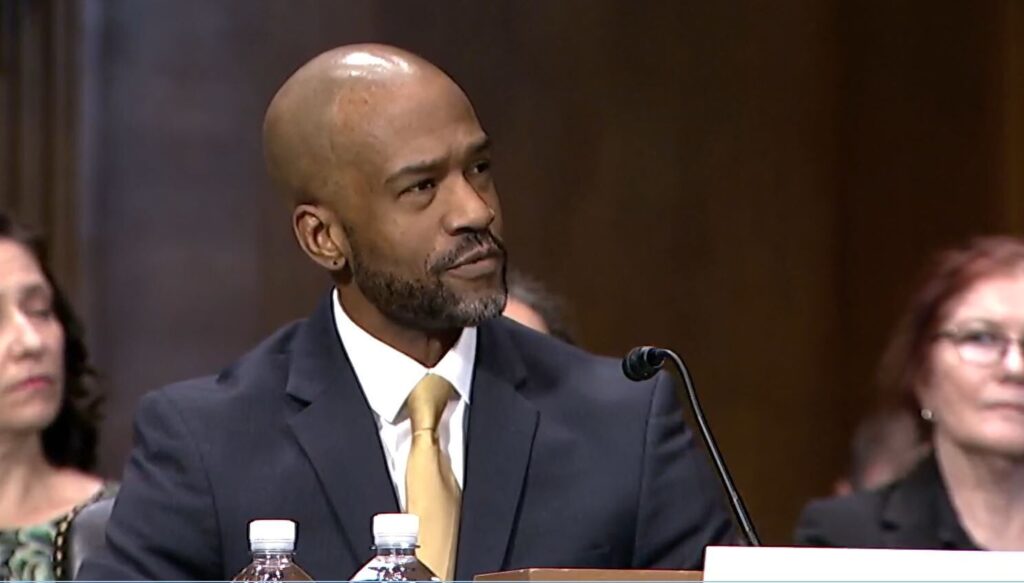
Federal judge deems Jeffco’s appeal ‘frivolous’ in jail death case
Michael Karlik
michael.karlik@coloradopolitics.com
Updated 3 days ago
A federal judge declared Jefferson County’s appeal of his evidentiary decision “frivolous” on Thursday, which enables him to continue handling the civil rights litigation even as an appellate court separately addresses the appeal. The order from U.S. District Court Judge...
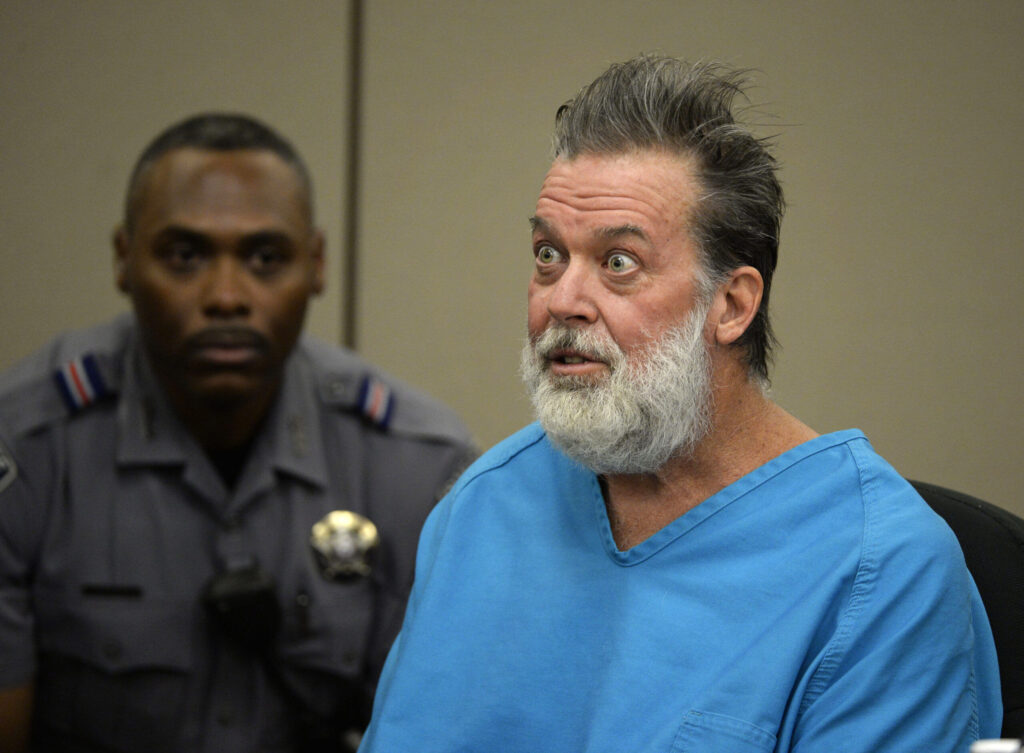
Cause of death revealed for self-proclaimed Planned Parenthood gunman
Mackenzie Bodell
mackenzie-bodell@coloradopolitics.com
Updated 3 days ago
The self-proclaimed gunman in the Planned Parenthood shooting in Colorado Springs in November 2015 died from congestive heart failure and other related medical conditions, the Federal Bureau of Prisons said in a recent court filing. The Federal Bureau of Prisons...
Federal judge lets ex-Castle Rock employee’s discrimination lawsuit proceed
Michael Karlik
michael.karlik@coloradopolitics.com
Updated 4 days ago
A federal judge rejected the town of Castle Rock’s effort to dismiss an ex-employee’s age and gender discrimination lawsuit on Wednesday, while deeming the case a close call. Carl E. Filler, who was in his mid-60s when the town hired...
PREV
PREVIOUS

Illegal parking fines in Denver to increase on Tuesday
Beginning on Tuesday, fines will increase for drivers who park illegally in Denver, according to the Department of Transportation and Infrastructure. For most parking violations, fines will increase by $10. For parking violations that block bike lanes, sidewalks or crosswalks, fines will increase $40 from $25 to $65. City officials said the increased fines align […]

Denver council OKs electronic monitoring contract with private prison company
The Denver City Council approved a $1.5 million contract Monday with B.I. Incorporated – owned by private prison giant GEO Group – for electronic monitoring equipment through Jan. 31, 2025. This comes after the council voted to cut ties with GEO Group in 2019, ending $10 million of contracts with GEO Group and CoreCivic, another […]