

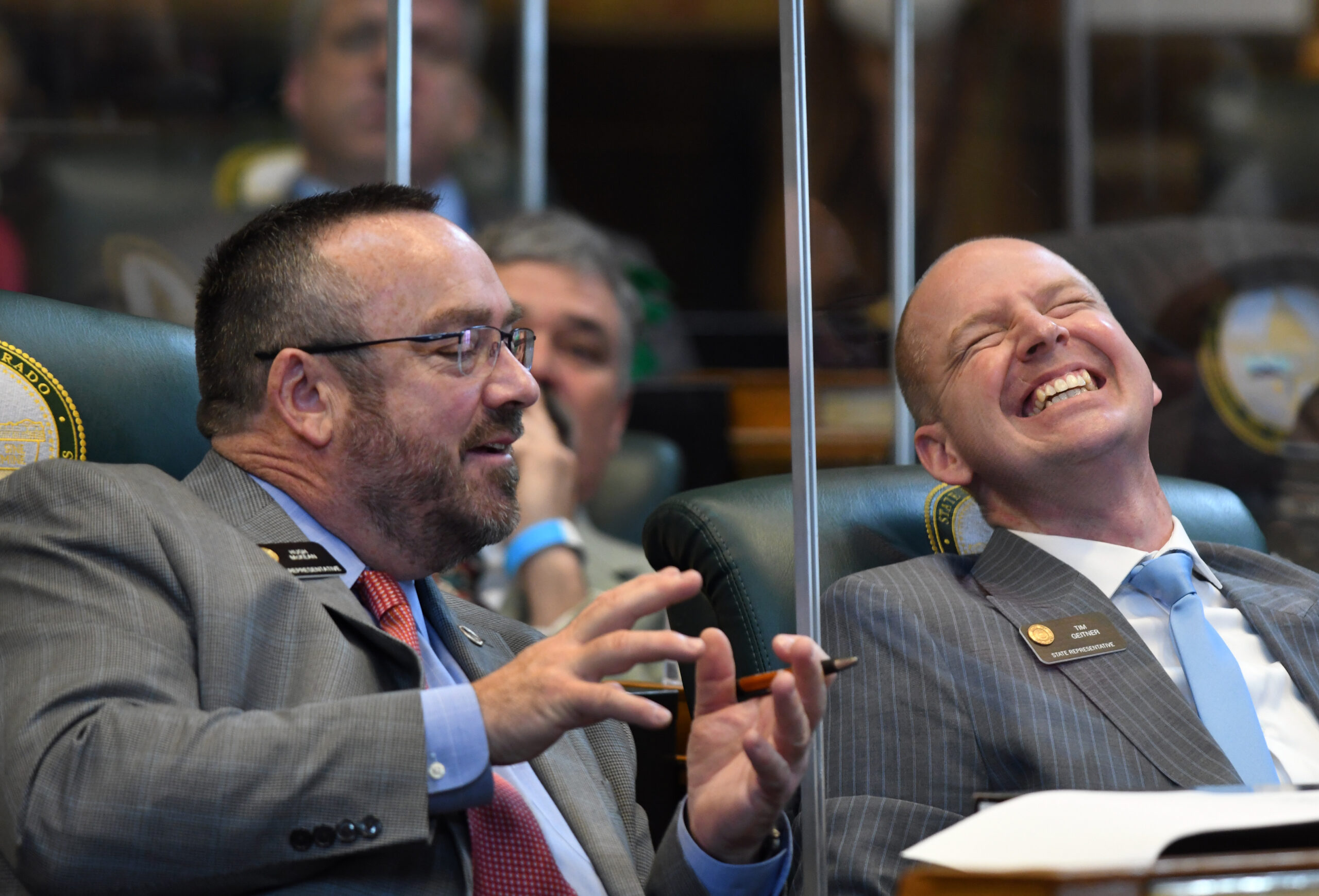
Q&A with Rep. Hugh McKean | House minority leader talks caucus dynamics, politics and elections

Colorado Politics: The last time we saw you in the context of a legislative session was when Rep. Ron Hanks called a no-confidence vote in you. The vote tally showed that you pretty easily beat back that challenge, but six months ago, eight House Republicans said they didn’t believe in your leadership. Heading into this session, where do you feel that caucus dynamic is?
Rep. Hugh McKean, R-Loveland: Well, I actually think that the vote of no confidence is one of the weirdest things in the world because what you really ended up having were people who don’t know how to count votes and then completely misrepresented the influence that they thought they had. That ends up being kind of a function of a lot of things that happened in this building. I mean, it’s a bunch of type A personalities.
I think our caucus is actually way more together today than it ever has been in the six years that I’ve been here and part of that is because we weather the storms. I weathered that storm by saying, “Take the vote.” I think the people who didn’t like that form of leadership don’t like anybody’s leadership that’s not theirs. Well, tough nuts. That’s just not the way it works.
CP: If that vote was held again today, where do you think it would be? Would it be 16-8 again, or 15-8 since you didn’t vote?

McKean: That was weird that they didn’t give a ballot to the person they were voting on who is a member of the caucus. But how do I think that vote would turn out? It would probably be less members on the losing side of that than there were last time. And partly because of exactly what I just said: As we weather these storms, I think number one, it builds confidence … we have legitimately the best staff that we’ve ever had, the best staff in the capital. That’s a function of leadership and making those decisions about what’s the best path forward for the caucus. People see that they understand it.
CP: You’ve made it quite clear that you think Democrats are ripping off your agenda. I’m curious about what that means practically. Does that spell trouble for getting your own caucus’ bills onto the governor desk? I foresee a situation where there are two bills on the same issue and the majority says: “We think our bills are better, so your bills are gonna die and our bills are gonna move forward.” Doubly so in an election year. Am I off base with any of that?
McKean: I think that what you see is a Republican response to the legitimate concerns of people in our state. The cost of living is way too high. And I won’t go deeply into all of them, but when you take things that make people uneasy, number one is, can I pay the bills? Number two is am I safe and is my family safe? And number three is do my kids have a future that we can really count on? And when those things are in question, as we have been seeing, then you’ve got some concerns.
The political side of this is, I think now you’re gonna see whether or not the Democrats mean what they say, which is not just to put forward Democrat ideas in a strictly partisan way. I think that’s a huge risk to the state as a whole that they take an election year and just ramp it up on steroids. What you should see ostensibly is a cooperative effort. We released 44 bills [on the opening day of session] and we will happily have the conversation about how can we make these bipartisan bills. How can we take these ideas and really help the people of Colorado.
Here’s the deal: It’s not just putting fees off into the future. It’s not just getting rid of the license driver’s license fee for a year. It’s get rid of these fees and taxes on the backs of Coloradans.
CP: I don’t think you’re a naive man by any means, but it strikes me as naive to think that we’re gonna get a bunch of bipartisanship in an election year when the issues that you’ve been calling them out on are all of a sudden the ones in the spotlight. With that in mind, what does success look like for you this year, legislatively?
McKean: Success looks like exactly the way you described. It’s either getting the work done with help from our Democrat majority in the state House. Success is also being able to show that that the reason why they had that list of empty boxes is because their priorities are a disingenuous attempt to try to get to the hearts of the voters, which they haven’t been paying attention to for the last six years.
So success is both directions. I’m not naive to think that they might just say, “No” in an election year and let these things run their course, which is usually a course of being defeated if they’re Republican bills in this kind of an environment. I think that tells the voters of Colorado a lot – that here are the priorities, but we only want them to be successes for the Democrats. That’s wrong and that’s the partisanship that Coloradans hate.
CP: Do you view what’s going to happen in November, the election results, as an extension of approval or disapproval of your work here in the legislature?
McKean: I think that November is gonna be a function of a few things. I think, number one, it’s gonna be the degree to which Democrats in this state have aligned themselves with a president who is at a loss for how to lead this country. And so the more that Democrats here in the last year and then the year upcoming align themselves with President Biden, who has historically low approval ratings because he sucks at his job – and so the fact is that Democrats keep saying, “Oh, we’re doing these great things.” No, they’re gonna own that and they should because the more you support failure, that failure begins to be your own.
The other thing is I think that truly the ability for Coloradans to figure out who means what they say is not just in the moment, Colorado voters are very smart and not just that, but they remember the things we’ve been talking about. Republicans have been talking about exactly these ideas for years. This is not some fresh poll that just came out. This is what we’ve been talking to our constituents about for decades. That means that Coloradans can trust the direction that we’re going, because we’ve been going that direction for a long time. The Democrats are sort of making a U-turn on a lot of their things where [they] imposed taxes and fees and restrictions, business license problems. All of these other things that have been imposed again and again, and now suddenly they’re like, “Oh, we’re on your side.”
CP: When we spoke a year ago, you talked about the historic opportunity that this election cycle could present. Now at that point, the national political environment wasn’t quite what it is at this point in terms of favoring your party. We also didn’t have the maps set by the nonpartisan commissions. So one year later, is there anything that’s changed? Do you feel more strongly?
McKean: I feel more strongly. I think that even more than then, we now have maps that were as fair as possible. And could we have gotten better maps? Yeah, but politically it wasn’t possible to get some of those through. Were these the best maps? No, but they’re much better than they would’ve been had it been left to a partisan divide and the courts.
I think this is probably the most remarkable opportunity we’ve had in a very long time. And the great thing is that as I go around the state, I almost exclusively fixate it on making sure that we have rational, reasonable, common-sense Republicans who are running for office to help the people of their districts. That’s it. It’s kind of a simple thing, but what it does is it says that we’re more focused on legislators who are bringing those solutions rather than just politics.
CP: I did want to put it in front of you what’s been reverberating in the political sphere, which is some of the language you chose to use in your radio interview with Jimmy Sengenberger. When talking about Democrats imposing fees, you describe that in part as “raping people of Colorado.” Do you think it’s appropriate for political leaders to use that type of language to describe what is essentially a fiscal policy decision, and then compared it to a violent crime?
McKean: So, number one, I think you need to define that. So, other people have attempted to put words in my mouth on that. And especially state Senate Faith Winter said that, as a victim of sexual assault, she really started ginning that up. First of all, there are several meanings to that word and one meaning is a sexual assault, not meant by me whatsoever.
But Miriam Webster, which I think is good to refer to, actually has as one of their definitions the exact definition I meant: An act or instance of robbing or despoiling, or carrying away a person by force. An act or instance of robbing a person by force. That’s exactly the right word for what we’re talking about, which is the people of Colorado have had the state government putting their hands in their pockets, taking money out of their children’s education future, taking out of their retirement, all of these other things for years.
And the challenge that we really have is that we get sort of funneled down into these little discussions that truly could have been solved by Sen. Winter picking up the phone and saying, “Is that what you meant? No? That’s not the meaning that you attributed to it? It is a valid meaning that’s there.”
And I think that’s what we need to do with each other is have a conversation. Is it a strong word? Absolutely. Do the people of Colorado feel like their government has been taking their money from them, robbing them of their ability to get ahead? 100%.
CP: I understand what you’re saying but that doesn’t seem to be the way that a majority of society understands the word rape. And it seems like when you say Sen. Winter could have picked up the phone and called you and resolved it – at the same time, you could have also used a different strong word to describe what clearly is an issue here.
McKean: I don’t disagree that there are other words I could use. However, I think that this is really the challenge we face when we’re trying to talk about some of these pretty big issues – it’s how to form them and form our arguments in a way that describes exactly what we’re trying to say. And so, I’ve been asked that, could I have used different words? Yes, I could. However, I also think that we have run the risk in the last several years of allowing the colloquialisms and and the meanings attributed to them to simply run roughshod over our use of our language. The reason why I cite Miriam Webster is really important because if you are using the word for the purpose that you desire, then I think that we should be attributed that grace of, “That’s what you meant, which is an act of robbing.”
I think that that’s really important. And in fact, that was one of the common meanings of this word for a very long time. And so does our language change? Yes. Do we always attribute everything to what the most popular definition of that word is? Not necessarily. And I just ask that – that Sen. Winter and other people say, “No, actually this is the appropriate use of that word.”
Could I used something different? Yes. But a lot of times we say what we are intending as the meaning. This is robbing, this is taking money from the people of the state of Colorado by force.
CP: I’m not sure if you knew this, but Rep. Matt Gray on opening day walked out of the chamber in protest of your radio comments. I’d also note that you and the speaker embraced after your speech. In light of where things were today – I don’t think I’ve heard the speaker yell like that before – where do you think things stand between the two caucuses in terms of interaction right now?
(Editor’s note: This interview was conducted on Jan. 18, shortly after a testy day on the House floor as lawmakers considered a voting rights resolution.)
McKean: I think that this debate today and especially the introduction to this resolution, which again is not something we engage in normally, this was very much out of our normal course of business for the people of Colorado. This is calling on the legislature of Colorado to support a bill in the United States Congress and in the United States Senate that would have a federal intervention in state law. We don’t ask for that. So, the debate around this did include a partisan divide.
Can we work together on a lot of stuff? Yes. But the challenge is always gonna be, especially when you come from being in the minority as long as I’ve been, is that there are times when we go exactly down that path: The majority has their way, the minority has their say. A lot of times it’s really important to get the say on the record because the Democrats in Colorado can do what they want. They have the House, the Senate and the governor’s office and that means that so much policy ends up as a very partisan divide. So, yeah, there were some arguments today.
Matt Gray and Faith Winter are apparently dear, dear, dear friends. And therefore, I think Matt had certain thoughts, but you know, the fact is that a lot of what we do here is the work that we have to do for the people of Colorado. We do a lot of it in a bipartisan fashion, especially with a current list of what both caucuses want to achieve. It’s a matter of how do we get there? How do we do those things?
FAST FACTS
Age? 54
Family? Two kids. Hannah, 23, and Aiden, 21.
Any new year’s resolutions? I don’t do new year’s resolutions. But I do have a word for the year: bold.
One thing about you that most people don’t know? I built furniture, but most people know that already.
Favorite cuisine? I live too close to Weld County. Good steak and potatoes. The best thing you can possibly have.
Favorite restaurants? John Elway’s or Carmine’s on Penn.

Colorado vacancy panels face challenge: Replacing senator and representative from the same area
Marianne Goodland
marianne.goodland@coloradopolitics.com
Updated 14 hours ago
Two vacancy committees that will convene in the next month or so will have an interesting challenge: Picking a new state senator and state representative who will represent the same geographic area. The vacancy election for Senate District 25, represented...

Colorado Democrat Julie Gonzales launches U.S. Senate primary challenge to incumbent John Hickenlooper
Ernest Luning
ernest.luning@coloradopolitics.com
Updated 14 hours ago
Declaring that Colorado “needs a fighter, not a bystander,” state Sen. Julie Gonzales, a Denver Democrat, on Monday launched her long-anticipated primary challenge to U.S. Sen. John Hickenlooper. Pitching her campaign as a departure from “old-playbook politics,” Gonzales said she’s...
Democrat Shannon Bird to step down from Colorado legislature to campaign full-time for Congress
Ernest Luning
ernest.luning@coloradopolitics.com
Updated 22 hours ago
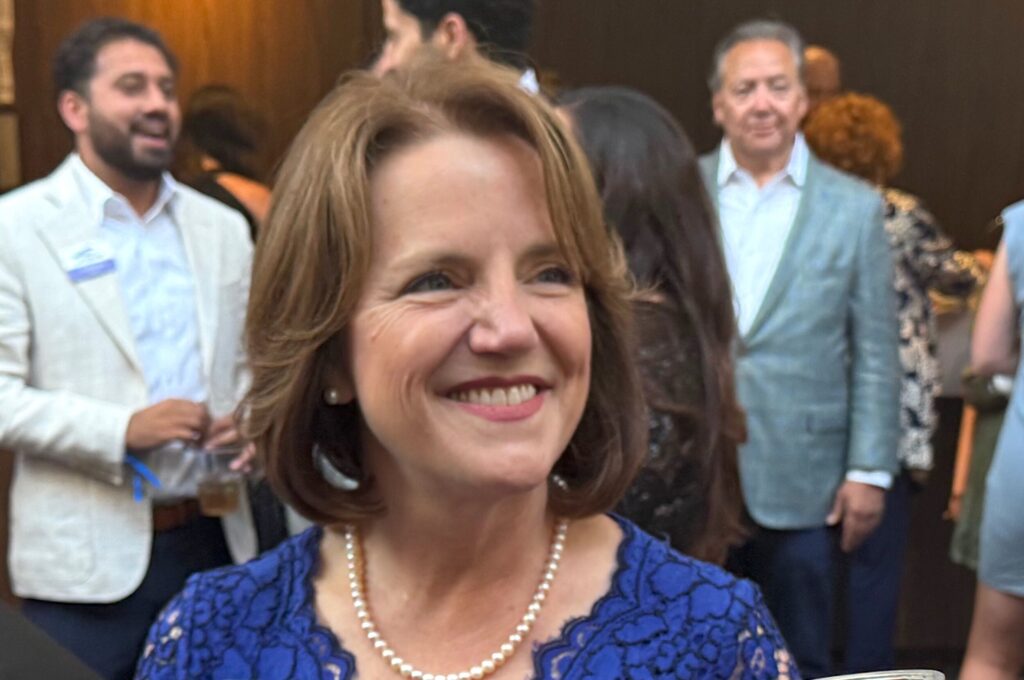
State Rep. Shannon Bird, a Westminster Democrat, said Sunday that she plans to resign from the Colorado legislature next month in order to focus on running for the 8th Congressional District seat held by Republican U.S. Rep. Gabe Evans. Bird...
Colorado Supreme Court to hear case on ballot measure disclosure requirements
Marissa Ventrelli
marissa.ventrelli@coloradopolitics.com
Updated 4 days ago
The Colorado Supreme Court has agreed to hear a case challenging whether the state can require ballot measure committees to disclose the names of their registered agents in election communications. The case stems from a complaint filed during the 2020...
Democrat Jena Griswold lands EMILYs List endorsement in Colorado attorney general race
Ernest Luning
ernest.luning@coloradopolitics.com
Updated 4 days ago
EMILYs List, a national organization that works to elect pro-choice, Democratic women, this week endorsed Colorado Secretary of State Jena Griswold’s bid for attorney general in next year’s election. The 41-year-old Griswold, who is term-limited, was the first Democrat elected...
Colorado secretary of state refuses to hand over election records to DOJ
Marissa Ventrelli
marissa.ventrelli@coloradopolitics.com
Updated 4 days ago
Colorado will not comply with the U.S. Department of Justice’s request to share certain voter information, Secretary of State Jena Griswold said on Wednesday. Federal authorities have sought voter data from more than two dozen states, framing it as part...
Charles Johnson retains District 11 school board seat after election recount
Gazette Staff
gazette-staff@gazette.com
Updated 4 days ago
The order of finish for the last of three open seats on the Colorado Springs School District 11 Board of Education remained the same after a recount, according to figures released Thursday from the El Paso County Clerk and Recorder’s...
Income tax overhaul in Colorado clears first hurdle, as revised estimate puts tax hike at $4 billion
Marianne Goodland
marianne.goodland@coloradopolitics.com
Updated 6 days ago
A state panel on Wednesday gave the go-ahead to a ballot measure that seeks to change Colorado’s flat rate of 4.41% to a graduated income tax, beginning in 2027, and raise billions dollars in new revenue. Now the proponents of...
Colorado title board to review graduated income tax proposal for 2026 election
Marianne Goodland
marianne.goodland@coloradopolitics.com
Updated 7 days ago
The Secretary of State’s title board on Wednesday will review another attempt at a graduated income tax ballot measure for the 2026 general election. In October, the title board had rejected two proposals submitted by the Bell Policy Center because...
Palmer Lake could see three special elections next year
Savannah Eller
savannah-eller@coloradopolitics.com
Updated 1 week ago
Turmoil continues in the town of Palmer Lake, where a Board of Trustees with frequent turnover has been deadlocked on multiple issues for months. The next year could see the town settling its differences in as many as three special...
PREV
PREVIOUS

Denver suspends jury trials until Feb. 11 citing COVID-19
Jury trials in Denver won’t resume until at least Feb. 11 due to the recent surge of COVID-19 cases caused by the omicron variant. Chief Judge Michael A. Martinez with the Second Judicial District, which includes Denver, made the executive order on Friday. He wrote while cases have began to slightly decrease, local health official […]
Denver recreation centers begin distributing KN95, surgical masks
Denver residents can now pick up to five free KN95 and surgical masks at the city’s recreation centers. The city’s Department of Parks and Recreation has received 100,000 masks to dole out across 29 facilities in Denver. Each resident can take up to five masks, which are free and available “while supplies last,” the city […]