

Task force calls for previously scrapped THC potency cap, lawmakers skeptical

A panel tasked with studying treatment of those with mental health disorders in the criminal justice system is calling for a 10% cap on THC potency for medical cannabis and criticized the removal of a potency cap from a high-profile marijuana concentrates bill that cleared the General Assembly earlier this year.
The recommendation came as subcommittees of the Mental Health Disorders in the Criminal Justice System Task Force on Wednesday presented bill concepts to a legislative oversight committee. It was put forward by former Pueblo-based addiction psychiatrist Dr. Libby Stuyt, who said her “ulterior motive” for joining the task force was the raise the alarm on “really significant problems with high-potency THC marijuana.”
Speaking on behalf of the Data and Information Sharing Subcommittee, Stuyt touted the provisions of House Bill 1317, the 2021 session’s landmark bill to study high-potency THC products while keeping them out of the hands of teenagers.
But she added the bill “totally missed the boat” in one area: a cap on THC.
An early draft of the bill from Rep. Yadira Caraveo, D-Thornton, obtained by Colorado Politics in February included a cap, which was set at 15%. That provision was removed by the time the bill was introduced in May, much to Stuyt’s displeasure.
“I really encourage you to think about this need that got missed. We really do need a potency cap,” she said, hinting lawmakers caved to the marijuana industry’s effort to fight the cap “tooth and nail.”
Stuyt pointed to 2015’s House Bill 1267, which allows those on probation and parole to access medical marijuana, was “causing all kinds of problems” during her time as medical director for the Circle Program at the Colorado Mental Health Institute in Pueblo.
“The people (on probation or parole) that were using their medical marijuana card, they were really difficult to work with,” she added. “They would be coming in basically high at the time of admission and it took months for that to clear out of their system.”
Rather than repealing that bill, Stuyt said she would prefer to see an overall potency limit.
But that recommendation was met with skepticism.
Rep. Judy Amabile, D-Boulder, noted it would be hard to monitor for those on probation or parole.
“You wouldn’t know if somebody took a 90% THC or a 5% THC when you do the testing … they just have a positive test,” she said. “It seems to me like you would have to say people who are on probation or parole, just like they can’t drink alcohol, they can’t use cannabis. That seems to me that would be the only way to do it.”
Rep. Adrienne Benavidez, a Denver Democrat who chairs the oversight committee, also indicated Stuyt’s request for the cap to apply to all Colorado citizens with a medical marijuana card was likely too broad to fit within the committee’s purview, which is focused on the intersection of mental and behavioral health and the criminal justice system.
“I know the challenges if we bring a bill from this committee, what we’re going to face with getting it just through the Legislative Council,” she said. That panel of legislative leaders from both parties and chambers is in part tasked with reviewing legislation crafted by interim committees to ensure it fits within the committee’s charge.
Two Legislative Council members – Speaker Alec Garnett, D-Denver, and Sen. Paul Lundeen, R-Monument – featured as co-prime sponsors of HB 1317. When asked about the potential return of a potency cap at the bill’s May unveiling, Garnett said he believed the version of the legislation without a potency cap represented “moving forward with what we think is the most responsible Colorado approach.”
“There are some who want us to go much further than we currently are,” he said. “There are some that don’t want us to do anything and what you have in front of you as a well-crafted, collaborative bill.”
Stuyt’s stated goal also differed from the point of emphasis Garnett placed when championing the bill through the legislative process. While Stuyt said she hoped to see an across-the-board cap for medical marijuana at 10% THC, Garnett focused heavily on keeping high-potency THC products away from those whose brains are still developing.
In fact, Garnett expressed concern about taking too strong of a regulatory stance in a February interview with Colorado Politics on THC caps.
“It shouldn’t be anyone’s goal to eliminate the billion-dollar constitutionally-protected and statutorily-regulated industry that Colorado and the legislature has created over the last nine years,” Garnett said in that interview. “A lot of jobs are tied to this industry, and obviously the general public has a pretty moderate relationship with marijuana products.
“You don’t want to come in and destroy the industry.”
Hashim Coates, executive director of Black Brown and Red Badged, a coalition of Black and brown marijuana business owners, slammed the effort as “simply abhorent.”
“This is neither the correct policy to address mental health assistance for those transitioning out of the criminal justice system, but it is the wrong committee to re-propose prohibition and recriminalization,” he said in a statement. “Essentially, the proponents of this policy want to further isolate vulnerable people into another social caste system and frankly, we will not stand for it.”
Benavidez’s committee is set to reconvene on Thursday to discuss requests for bill drafts before meeting again in late October to vote on which legislation to move forward with.
The panel also features Sen. Robert Rodriguez, D-Denver, as vice chair as well as Sens. Pete Lee, D-Colorado Springs, and Cleave Simpson, R-Alamosa, and Rep. Rod Pelton, R-Cheyenne Wells.


Colorado gun policy receives ‘A-‘ from Giffords Law Center
Marissa Ventrelli
marissa.ventrelli@coloradopolitics.com
Updated 13 hours ago
Colorado earned an A minus anew on the Giffords Law Center’s annual Gun Law Scorecard – due in part to a law passed during the last legislative session that requires individuals to undergo training and obtain a permit to purchase...

Colorado vacancy panels face challenge: Replacing senator and representative from the same area
Marianne Goodland
marianne.goodland@coloradopolitics.com
Updated 13 hours ago
Two vacancy committees that will convene in the next month or so will have an interesting challenge: Picking a new state senator and state representative who will represent the same geographic area. The vacancy election for Senate District 25, represented...
Higher home values, abatements to push DPS tax bills up in 2025
Nico Brambila
nico.brambila@denvergazette.com
Updated 11 hours ago
Denver homeowners will pay more in school taxes next year even though Denver Public Schools (DPS) slightly lowered its overall tax rate. The increase is being driven by rising assessed home values, a full 52.142-mill levy and a dramatic increase...

Trump administration announces $12 billion soybean aid package
RACHAEL WRIGHT Special to The Gazette
rachael-wright-special-to-the-gazette@coloradopolitics.com
Updated 13 hours ago
President Donald Trump and Secretary of Agriculture Brooke Rollins announced Monday that the administration was planning to disburse a $12 billion dollar aid package as part of the Farmer Bridge Assistance (FBA) Program, to make targeted, one-time payments to crop...
Federal judge rejects Tina Peters’ request for release pending appeal
Michael Karlik
michael.karlik@coloradopolitics.com
Updated 14 hours ago
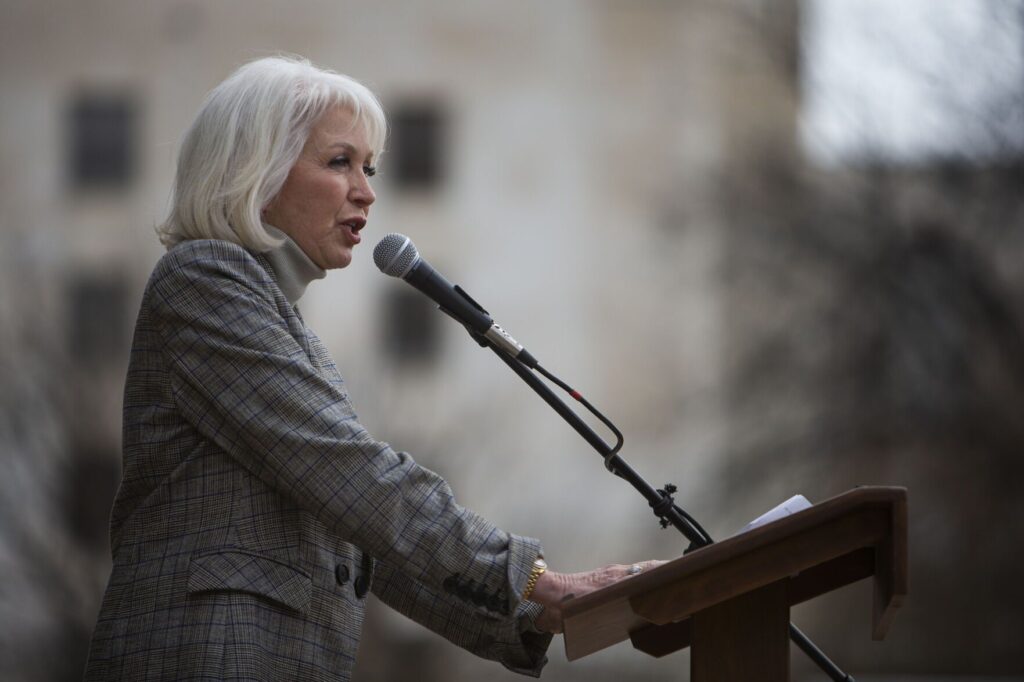
A federal judge rejected the petition of former Mesa County clerk Tina Peters on Monday to be released from incarceration pending the resolution of her criminal appeal. Chief U.S. Magistrate Judge Scott T. Varholak wrote in a Dec. 8 order...
Colorado justices lay down framework for analyzing defamation lawsuits involving ‘public interest’ issues
Michael Karlik
michael.karlik@coloradopolitics.com
Updated 16 hours ago
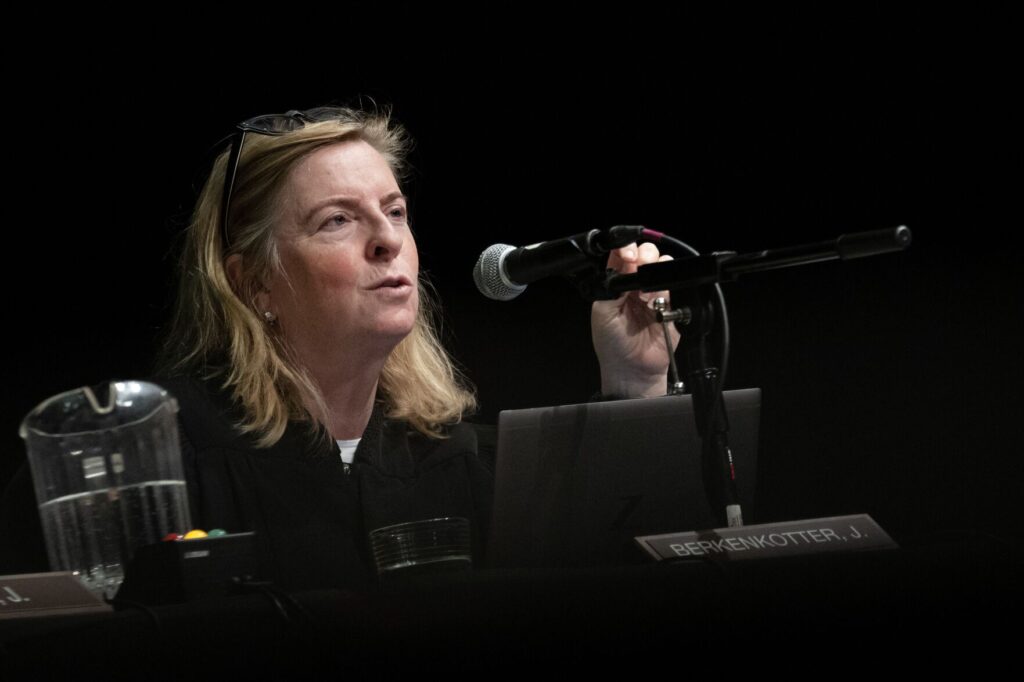
The Colorado Supreme Court clarified on Monday how judges should evaluate whether lawsuits arising from a person’s speech — in particular, online consumer reviews — are connected to an “issue of public interest” and merit protection from legal liability. As...

Federal judge rejects DPS’ attempt to obtain 9News sourcing documents in First Amendment case
Michael Karlik
michael.karlik@coloradopolitics.com
Updated 17 hours ago
A federal judge rejected Denver Public Schools’ attempt on Monday to obtain documents from 9News related to its interview with a former principal who alleges his termination amounted to a constitutional violation. At the same time, the attorney for plaintiff...

Audit finds major gaps in Colorado’s oil and gas reporting, enforcement
Marissa Ventrelli
marissa.ventrelli@coloradopolitics.com
Updated 16 hours ago
The agencies responsible for regulating Colorado’s oil and gas industry are underperforming when it comes to reporting and enforcement and they also failed to collect payments amounting to hundreds of thousands of dollars in lost revenue, according to a state...

Colorado Gives Foundation turns 50 during giving season
Kyla Pearce
kyla.pearce@gazette.com
Updated 21 hours ago
Colorado Gives Day is Tuesday. The Colorado Gives Foundation, which started as a small hospital fundraising group and has grown into a statewide nonprofit, is celebrating its 50th anniversary shortly after Giving Tuesday. Colorado Gives Day, which was created by...

Colorado Democrat Julie Gonzales launches U.S. Senate primary challenge to incumbent John Hickenlooper
Ernest Luning
ernest.luning@coloradopolitics.com
Updated 13 hours ago
Declaring that Colorado “needs a fighter, not a bystander,” state Sen. Julie Gonzales, a Denver Democrat, on Monday launched her long-anticipated primary challenge to U.S. Sen. John Hickenlooper. Pitching her campaign as a departure from “old-playbook politics,” Gonzales said she’s...
PREV
PREVIOUS

Colorado abortion clinics, advocates see surge of patients from Texas in wake of new law
Colorado abortion providers and their supporters are seeing an increasing number of women from Texas after a strict law banning the procedure in their home state took effect last week. The majority of new patients contacting Cobalt in the last week are from Texas, said a spokeswoman for the Colorado organization that advocates for abortion […]

Democrats name members to panel guiding $700 million in federal relief funds
Reps. Alex Valdez and Mary Young with Sens. Robert Rodriguez and Dominick Moreno will serve on a task force charged with recommending on how the state should spend some $700 million in federal relief funds, Democratic legislative leaders announced Wednesday. The Economic Recovery and Relief Task Force, created by Senate Bill 291 and authorized by […]