

Denver voters will decide this November whether to raise taxes in the fight against climate change

Voters will be asked on the ballot this November if their sales taxes should be raised to fund efforts to reduce the city’s climate footprint.
If approved, the city beginning in January would impose a 0.25% sales tax, whose funding would be dedicated to renewable energy efforts, including “steep reductions” in fossil fuel consumption and “significant improvements” in air and water quality, the bill states. Half of the revenue will be dedicated directly to underserved communities with a “strong lens toward equity, race and social justice.”
The Denver City Council referred the measure to the ballot on Monday night in an 11-1 vote, with Councilman Chris Hinds absent. Councilman Kevin Flynn, who represents District 2 in southwest Denver, voted against the measure on grounds that the city “settled on the default, the easy way out, which is sales tax, which is regressive.” Asking voters to give the city money in the wake of a pandemic and economic downturn, he said, is not the “appropriate way” to raise this revenue.
“I feel that we’re asking too much from our voters right now,” Flynn reasoned, highlighting the fact that the city will also ask voters to raise sales taxes to fund homelessness services, which Flynn plans to support.
He said he would rather see Resilient Denver’s ballot initiative move forward, which would have established a tax on electricity and natural gas. Resilient Denver advocates say they will now pull their ballot initiative with the referral of this new tax.
Alexis Morris agreed with Flynn. She was one of 11 residents who weighed in during the public hearing on the bill, and the only one who spoke in opposition.
“The environment is a really important issue to me in my heart, … but I cannot support a regressive tax like this that unjustly puts the burden on lower-class Americans,” she said, arguing that the tax should be shifted to the biggest polluters.
Councilwoman Candi CdeBaca, who represents the Elyria-Swansea neighborhood in District 9, agreed with Flynn and Morris, but maintained voters should have a choice.
“I think our voters are smart, and I think our voters are frustrated about how we’ve used tax dollars,” she said. “And when they see tax increases on the ballot, I don’t think we’ve given them a reason to pass any of them … or proof of our ability to manage their money wisely in the first place.”
The increase is estimated to generate about $36 million in its first year, accounting for the economic fallout from the coronavirus pandemic, according to the city’s 26-member Climate Action Task Force, which led the initiative. The committee is made up of representatives from the Sierra Club, Denver Metro Association of Realtors, Xcel Energy, the International Indigenous Youth Council, Denver Streets Partnership and others.
Funds would be used for clean energy jobs, investments in solar power, neighborhood-based environmental and climate justice programs, adaptation and resiliency programs that help vulnerable communities prepare for climate change, clean transportation programs, and more.
The tax, albeit just a step in many more to potentially come, would help the city meet its environmental goals of achieving a 40% decrease in Denver’s greenhouse gas emissions by 2025, a 60% drop by 2030 and a 100% decrease by 2040. By implementing “bold policies,” the task force maintains, Denver can be positioned as “a model for the nation” that centers its environmental policy “design, programs, and investments in front-line communities and inspire(s) people in our city to embrace sustainability as a value.”
The environmental committee estimates the city will need up to $3.4 billion to fully realize those plans, and the sales tax increase would be but a step of possibly many more to come, including implementing a vehicle efficiency fee, raising parking meters and parking permit fees. The investment cost of a few billion dollars pales in comparison, they say, to the roughly $20 billion they estimate could be incurred from inaction.
“This to me is the right way to go,” said Councilman Paul Kashmann, who represents District 6 in southeast Denver. “It’s an essential step in preparing Denver to remain a viable city in the future and doing our part to solve this problem. We can’t solve the world’s problem. But this is an opportunity for us to lead.”



Aurora seats new progressive council
Kyla Pearce
kyla.pearce@gazette.com
Updated 12 hours ago
Aurora’s four new councilmembers and an incumbent were sworn in Monday night, marking the beginning of a progressive-majority council rule in the city that has been led by conservatives for years. “This is what democracy looks like,” new at-large member...
Dean alleges firing over opposition to book ban in Elizabeth School District
Deborah Grigsby
deborah.smith@denvergazette.com
Updated 15 hours ago
A former Elizabeth Middle School dean of students has filed a lawsuit in federal court alleging she was terminated because of her opposition to the district’s book ban policy and her advocacy against “racism” in the school. On Nov. 30,...

Heading into holidays, shoplifting on the rise in Colorado, study says
Mark Samuelson Special to The Denver Gazette
mark.samuelson@denvergazette.com
Updated 15 hours ago
Shoplifting and other forms of retail crime are seeing a sharp rise as Colorado heads into the holidays, according to a study. After falling from a recent-record 24,975 thefts reported in 2015 to around 18,000 in 2021, Colorado Bureau of...
Funeral for Sen. Faith Winter will be held Friday at the Colorado Capitol
Marianne Goodland
marianne.goodland@coloradopolitics.com
Updated 15 hours ago
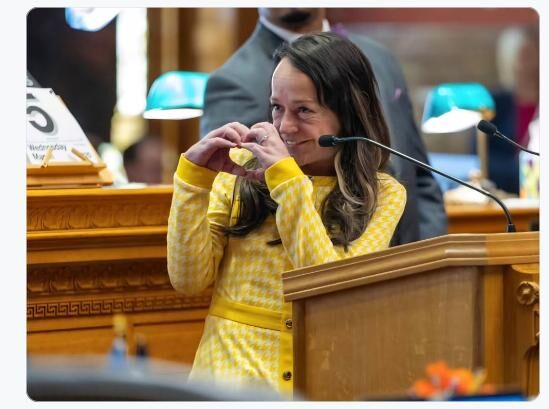
Colorado Sen. Faith Winter will be remembered on Dec. 5 at 2 p.m. in a funeral service on the state Capitol’s west steps. A celebration of life reception will follow. Winter died on Wednesday, Nov. 26, in a three-vehicle accident...
10th Circuit rules Greeley officer unconstitutionally detained man standing outside home
Michael Karlik
michael.karlik@coloradopolitics.com
Updated 16 hours ago
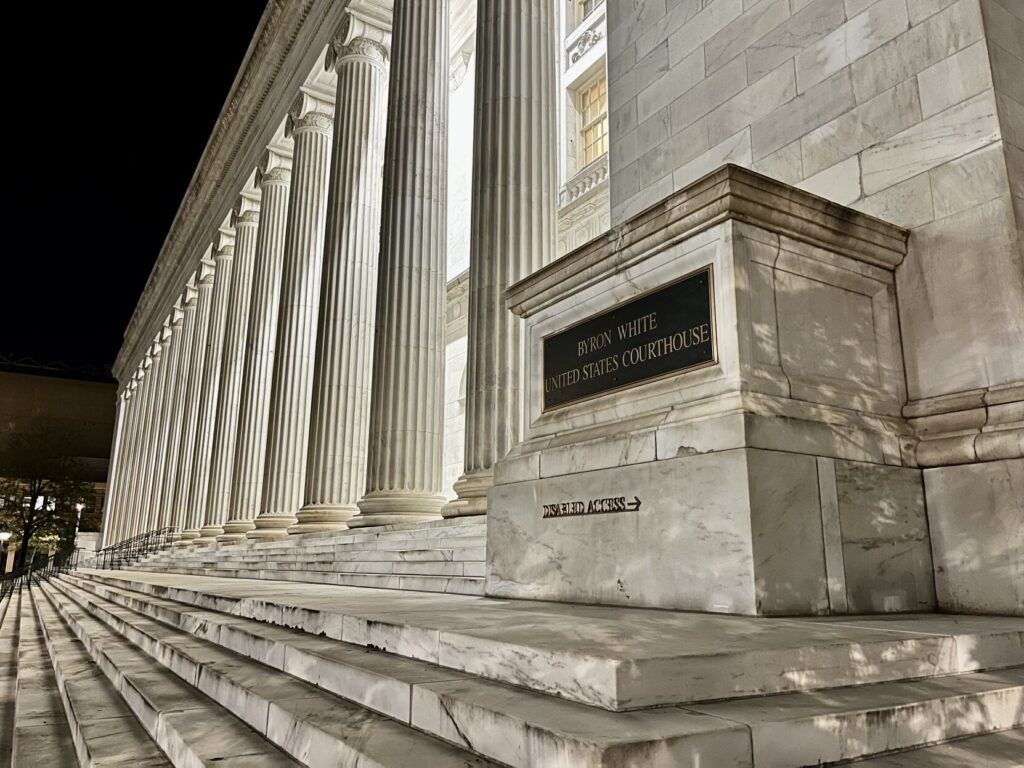
The Denver-based federal appeals court concluded last week that a Greeley police officer lacked reasonable suspicion to detain a man who was standing outside the door of a residence and not engaging in any indicators of criminal activity. A three-judge...

Copper Creek yearling wolf blamed for livestock death in Gunnison County
Marianne Goodland
marianne.goodland@coloradopolitics.com
Updated 16 hours ago
A heifer found dead in eastern Gunnison County on Nov. 22 was killed by one of the yearlings from the Copper Creek wolf pack, according to a rancher, who did not want to be identified. It’s the fourth livestock death...

‘Utterly no precedent’: Federal judge expresses concerns about Jeffco’s early appeal in jail death case
Michael Karlik
michael.karlik@coloradopolitics.com
Updated 15 hours ago
A federal judge shared his concerns on Monday about Jefferson County’s appeal of a routine procedural order in a constitutional rights case, which the plaintiffs argued could spawn appeal-related delays in countless lawsuits against the government. During a hearing, U.S....

Justice Hart’s absence continues, state Supreme Court hears oral arguments | COURT CRAWL
Michael Karlik
michael.karlik@coloradopolitics.com
Updated 19 hours ago
Welcome to Court Crawl, Colorado Politics’ roundup of news from the third branch of government. One member of the Colorado Supreme Court remains on an unusual leave of absence, plus the court heard oral arguments in eight more cases last...
Denver Art Museum gala honors treasured benefactors Kent and Vicki Logan | NONPROFIT REGISTER
Joanne Davidson Special to Colorado Politics
joanne-davidson-special-to-colorado-politics@coloradopolitics.com
Updated 19 hours ago
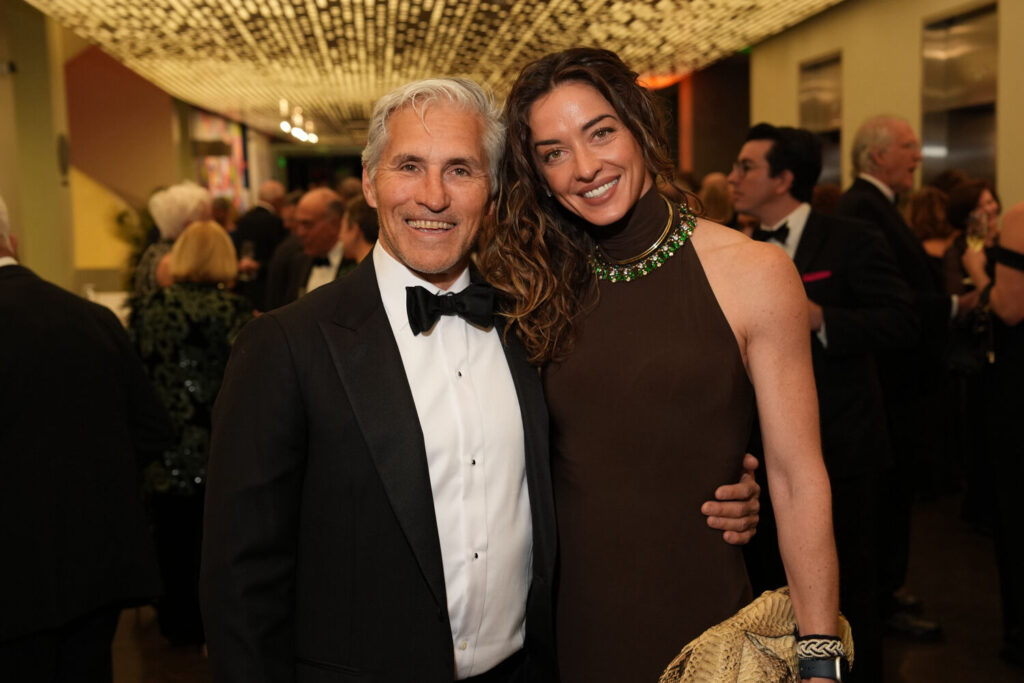
DENVER ART MUSEUM Denver News: Kent and Vicki Logan, who 25 years ago made the largest gift in the history of the Denver Art Museum’s modern and contemporary art department, were the honorees when the DAM hosted the 43rd edition of its...

The Colorado Lottery’s mega-bad idea | Sondermann
Eric Sonderemann
eric-sonderemann@coloradopolitics.com
Updated 23 hours ago
There are plenty of lousy, miserable, misguided whims out there. Then, every so often, you come across a notion so wrong-headed that it qualifies as phenomenally bad. Or, in words the marketing whizzes at the Colorado Lottery might understand, let’s...
PREV
PREVIOUS

LYNN BARTELS | Lamar again finds itself at center of savage debate
It was a headline I knew was coming for weeks, yet there was a catch in my throat when I read it in The Denver Post: “If Washington can bury the Redskins name, why is Lamar still standing by its Savages?” The Eastern Plains town has successfully fought various attempts to change its high school […]
Report: Metro State using furloughs to combat $14M shortfall
As the economic effects of COVID-19 continue to cause financial trouble across the country, Metro State University of Denver has announced how they will address their budgetary shortfall: faculty and staff furloughs. According to The Denver Post, effective immediately all staff and faculty who earn more than $50,000 annually will have to take unpaid furlough […]