

Tipton, Lamborn question whether Forest Service is prepared for Colo. fire season

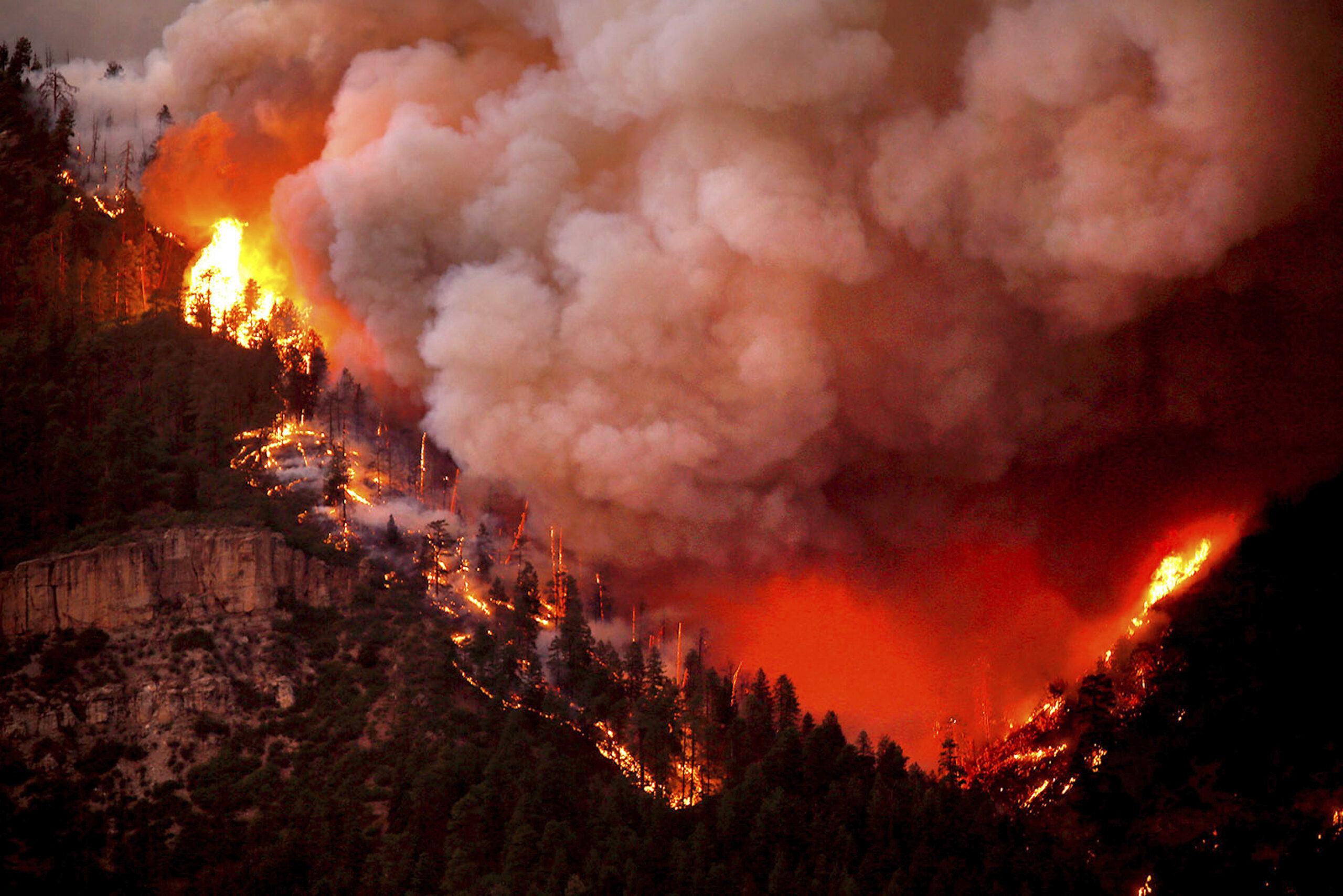
WASHINGTON – Two Colorado congressmen sought assurances from a Trump administration official Thursday that forest firefighting measures are adequate, as a blaze in southwestern Colorado forced the evacuation of thousands of residents.
“When we’re talking about being able to keep some of the firefighters safe, when you get into the rugged terrain in southwest Colorado and the San Juan Mountains, it’s difficult to be able amble up and down those hillsides,” Colorado U.S. Rep. Scott Tipton said during a congressional hearing. “Sometimes aerial firefighting is the best way to try to get some suppressional control over the fire.”
He was speaking to Victoria Christiansen, interim chief of the U.S. Forest Service, during a hearing of the House Natural Resources subcommittee on federal lands. She was the sole witness as the subcommittee attempted to assess wildfire risks while summer once again makes flames ravage Western states.
Meanwhile, the Forest Service has been trying to reduce costs by relying less on “exclusive use” aircraft that are always supposed to be ready to respond to wildfires. Air tankers can drop as much as 19,000 pounds of flame retardant chemical on wildfires.
Instead, the Forest Service plans to operate with more “call-when-needed” air tankers that could be drawn from other organizations, including the U.S. military and the Canadian government.
Tipton, R-Cortez, questioned whether the plan for stretching aircraft resources could provide enough protection against wildfires.
Christiansen told him the Forest Service was using 25 large air tankers so far this year and planned to use 30 more later this summer.
“Large air tankers and aircraft are a very important wildfire response tool,” Christiansen said. “But they alone don’t put out the fires.”
Firefighters on the ground also play an important role, she said.
“We work hard to find the right balance,” Christiansen said.
In addition to protecting the environment, the Forest Service seeks to demonstrate “fiscal integrity to the taxpayers of this country,” she said.
Tipton authored the Healthy Forest Management Act of 2015, which would have given forestry companies greater authority to trim forests and remove underbrush. In addition to creating forestry jobs, the bill sought to reduce potential fuel for wildfires.
Although the bill never won final approval in Congress, some of its concepts for trimming forests were merged into other legislation.
Christiansen said overgrowth of the forests was contributing to the wildfires, particularly when beetles eat trees and leave them as dry wood ready to burn.
“In my simple terms, I call it a smorgasbord” for beetles, Christiansen said. With the current growth of forests, “We’re overstocked,” she said.
Until the mid-1990s, forestry companies harvested an average of 10 to 12 billion board feet of timber every year, according to a congressional report. By 2015, less than 2.9 billion board feet were harvested, largely because of complaints by environmentalists about stripping forests and removing habitat for wildlife.
At the same time, the number of wildfires increased. Last year, more than 8.5 million acres were burned by wildfires, the most since 2012.
Colorado U.S. Rep. Doug Lamborn, R-Colorado Springs, said he thought the Forest Service showed a “reluctance” to seek contracts for “Very Large Air Tankers,” or VLATs, that could help fight wildfires.
Christiansen disagreed the Forest Service was neglecting its duties with aircraft.
“We don’t always need 19,000 pounds of retardant,” she said.
However, she also assured Lamborn the Forest Service would cooperate with Congress in ensuring the availability of the aircraft.
About the same time the congressional subcommittee was meeting Thursday, firefighters were telling hundreds of residents around Hermosa to prepare for evacuation. More than 1,000 homes already were evacuated.
The week-old blaze, known as the 416 Fire, has burned about 8 square miles of land 10 miles north of Durango. Firefighters plan to use fire lines to limit the spreading flames.
Despite use of air tankers, sprinkler systems and fire hoses, the wildfire is only a little more than 10 percent contained, according to officials.
The Associated Press contributed to this report.


Aurora seats new progressive council
Kyla Pearce
kyla.pearce@gazette.com
Updated 3 hours ago
Aurora’s four new councilmembers and an incumbent were sworn in Monday night, marking the beginning of a progressive-majority council rule in the city that has been led by conservatives for years. “This is what democracy looks like,” new at-large member...

Dean alleges firing over opposition to book ban in Elizabeth School District
Deborah Grigsby
deborah.smith@denvergazette.com
Updated 6 hours ago
A former Elizabeth Middle School dean of students has filed a lawsuit in federal court alleging she was terminated because of her opposition to the district’s book ban policy and her advocacy against “racism” in the school. On Nov. 30,...

Heading into holidays, shoplifting on the rise in Colorado, study says
Mark Samuelson Special to The Denver Gazette
mark.samuelson@denvergazette.com
Updated 6 hours ago
Shoplifting and other forms of retail crime are seeing a sharp rise as Colorado heads into the holidays, according to a study. After falling from a recent-record 24,975 thefts reported in 2015 to around 18,000 in 2021, Colorado Bureau of...

Funeral for Sen. Faith Winter will be held Friday at the Colorado Capitol
Marianne Goodland
marianne.goodland@coloradopolitics.com
Updated 6 hours ago
Colorado Sen. Faith Winter will be remembered on Dec. 5 at 2 p.m. in a funeral service on the state Capitol’s west steps. A celebration of life reception will follow. Winter died on Wednesday, Nov. 26, in a three-vehicle accident...
10th Circuit rules Greeley officer unconstitutionally detained man standing outside home
Michael Karlik
michael.karlik@coloradopolitics.com
Updated 7 hours ago
The Denver-based federal appeals court concluded last week that a Greeley police officer lacked reasonable suspicion to detain a man who was standing outside the door of a residence and not engaging in any indicators of criminal activity. A three-judge...

Copper Creek yearling wolf blamed for livestock death in Gunnison County
Marianne Goodland
marianne.goodland@coloradopolitics.com
Updated 7 hours ago
A heifer found dead in eastern Gunnison County on Nov. 22 was killed by one of the yearlings from the Copper Creek wolf pack, according to a rancher, who did not want to be identified. It’s the fourth livestock death...

‘Utterly no precedent’: Federal judge expresses concerns about Jeffco’s early appeal in jail death case
Michael Karlik
michael.karlik@coloradopolitics.com
Updated 6 hours ago
A federal judge shared his concerns on Monday about Jefferson County’s appeal of a routine procedural order in a constitutional rights case, which the plaintiffs argued could spawn appeal-related delays in countless lawsuits against the government. During a hearing, U.S....

Justice Hart’s absence continues, state Supreme Court hears oral arguments | COURT CRAWL
Michael Karlik
michael.karlik@coloradopolitics.com
Updated 10 hours ago
Welcome to Court Crawl, Colorado Politics’ roundup of news from the third branch of government. One member of the Colorado Supreme Court remains on an unusual leave of absence, plus the court heard oral arguments in eight more cases last...

Denver Art Museum gala honors treasured benefactors Kent and Vicki Logan | NONPROFIT REGISTER
Joanne Davidson Special to Colorado Politics
joanne-davidson-special-to-colorado-politics@coloradopolitics.com
Updated 10 hours ago
DENVER ART MUSEUM Denver News: Kent and Vicki Logan, who 25 years ago made the largest gift in the history of the Denver Art Museum’s modern and contemporary art department, were the honorees when the DAM hosted the 43rd edition of its...

The Colorado Lottery’s mega-bad idea | Sondermann
Eric Sonderemann
eric-sonderemann@coloradopolitics.com
Updated 14 hours ago
There are plenty of lousy, miserable, misguided whims out there. Then, every so often, you come across a notion so wrong-headed that it qualifies as phenomenally bad. Or, in words the marketing whizzes at the Colorado Lottery might understand, let’s...
PREV
PREVIOUS

Fact checking the Colo. governor’s race: 5 education claims dividing Democratic contenders
With less than a month to go before the primary, the Democratic candidates for governor of Colorado are sparring not over the future of education policy but over the past. Two main issues are at play in the negative ads, contentious debate exchanges, and accusatory mailers that have made their way into mailboxes across Colorado: […]

Hickenlooper creates task force on abuses in construction industry
Colorado added almost 10,000 jobs in the construction industry between April 2017 and April of this year, but that growth is accompanied by complaints about payroll and employee “misclassification” that Gov. John Hickenlooper says can lead to labor-law violations. This week, he signed an executive order setting up an enforcement task force that will coordinate with […]