

The Colorado Springs Gazette: The Gazette assesses the Democratic field in governor’s race
Crowded election primaries push candidates toward a party’s more extreme positions, as candidates know they must attract support from the base. That may explain why the four candidates for the Democratic gubernatorial nomination appear less moderate than we have known them in the past.
As our state faces the monumental decision of choosing a new governor to replace term-limited Gov. John Hickenlooper, The Gazette’s editorial board met with all four Democrats. We witnessed debates among them, including one sponsored by The Gazette.
Our due diligence left us impressed with the field. It also revealed policy positions starkly in contrast to our own, so much so we were unable to endorse.
Instead, we share here our observations and insights in the hope they will help Democratic primary participants with their research.
All four candidates are well-known Coloradans, with years of public service:
All of these candidates have impressive professional, academic, and public service backgrounds. Lynne and Polis have run large businesses and signed the front of paychecks. None of these candidates lacks knowledge of the issues or the ability to connect with voters.
Even if we agreed with most of their platforms, which is not the case, choosing among this field would be difficult.
Johnston and Lynne seem to attack issues more with a pure problem solving stance, versus Polis and Kennedy who mostly start with liberal dogma.
As examples of our key concerns with all candidates:
“I voted against legalizing marijuana,” Kennedy told us. “I have two teenagers and I think it sends the wrong message. That said, I think Colorado has done good job developing a regulatory system that is a model for the nation.”
We call the model a cautionary tale.
Polis wants “Medicare for all,” with private options to augment baseline coverage.
Paying for increased health insurance would likely come from increased spending, paid for by increasing taxes or shortchanging education, transportation, and other basic government services. Governor John Hickenlooper did the latter to increase state Medicaid at an expense to the general fund. In the wake of Medicaid expansion, Hickenlooper and others claim the state can’t afford adequate funding of roads and schools.
The list could go on, but the board was simply too far apart from each of these candidates on everything from taxes, to civil liberties, to transportation, and more.
On energy, Lynne and Johnston offer the more moderate and reasonable positions. Lynne emphasizes the need for statewide drilling and extraction policies that apply evenly in all parts of the state. She says a 2,500-foot setback, to separate homes from oil and gas production, goes too far.
Though relieved by Lynne’s moderate defense of energy production, we are troubled by her pledge during The Gazette’s “Apple Pie, Issues, and Banjos” debate to never support rescinding any tax. The comment came during a discussion on the economic benefits of nixing the business personal property tax.
Education policy provides the greatest rift among these candidate, who otherwise agree on an assortment of key contemporary issues.
Johnston and Polis are leaders in educational choice. Johnston stands out for leading the charge to improve teacher outcomes. He authored Senate Bill 191 in 2010, which supported professional growth of teachers with a series of reforms to improve evaluations and reward good results.
Kennedy has the enthusiastic endorsement of the state and national teachers unions, which don’t approve of educational improvements advocated by Polis and Johnston. The political action committee “Teacher for Kennedy” spent $1.1 million on an ad buy, so far, to blast Johnston and Polis as school choice advocates threatening funding for public schools. Of course, that’s not true. Polis and Johnston unconditionally denounce vouchers. They support charter schools, but charter schools are public schools. Kennedy told us she agrees with that, and that charter schools &mdahsh; at least some of them, in her estimation – get good results. That leaves us wondering what her supporters are taking about.
In opposing vouchers, Polis references “separation of church and state.” Johnston defends his voucher opposition by mentioning Colorado’s Blaine Amendment, though not by name. Blaine is a troublesome state constitutional amendment rooted in a sordid history of keeping religious organizations from helping minority immigrants obtain formal educations in the 19th and 20th centuries.
Kennedy’s concern for teachers and students seems genuine. We share her concern for low teacher wages, and agree they must be raised. So do other Democratic candidates for governor, but none offer a solution involving difficult decisions to re-prioritize state spending on non-essential government services – namely Medicaid.
While foregoing an endorsement, the board remains genuinely impressed with the quality of all four Democratic candidates. We applaud them for taking time to converse with us, and participate in our candidate’s forum. For those wanting to reinvent Colorado with an expensive revolution of big-government solutions, any of these candidates could get the job done.


Aurora seats new progressive council
Kyla Pearce
kyla.pearce@gazette.com
Updated 5 hours ago
Aurora’s four new councilmembers and an incumbent were sworn in Monday night, marking the beginning of a progressive-majority council rule in the city that has been led by conservatives for years. “This is what democracy looks like,” new at-large member...
Dean alleges firing over opposition to book ban in Elizabeth School District
Deborah Grigsby
deborah.smith@denvergazette.com
Updated 8 hours ago
A former Elizabeth Middle School dean of students has filed a lawsuit in federal court alleging she was terminated because of her opposition to the district’s book ban policy and her advocacy against “racism” in the school. On Nov. 30,...

Heading into holidays, shoplifting on the rise in Colorado, study says
Mark Samuelson Special to The Denver Gazette
mark.samuelson@denvergazette.com
Updated 8 hours ago
Shoplifting and other forms of retail crime are seeing a sharp rise as Colorado heads into the holidays, according to a study. After falling from a recent-record 24,975 thefts reported in 2015 to around 18,000 in 2021, Colorado Bureau of...
Funeral for Sen. Faith Winter will be held Friday at the Colorado Capitol
Marianne Goodland
marianne.goodland@coloradopolitics.com
Updated 9 hours ago
Colorado Sen. Faith Winter will be remembered on Dec. 5 at 2 p.m. in a funeral service on the state Capitol’s west steps. A celebration of life reception will follow. Winter died on Wednesday, Nov. 26, in a three-vehicle accident...
10th Circuit rules Greeley officer unconstitutionally detained man standing outside home
Michael Karlik
michael.karlik@coloradopolitics.com
Updated 9 hours ago
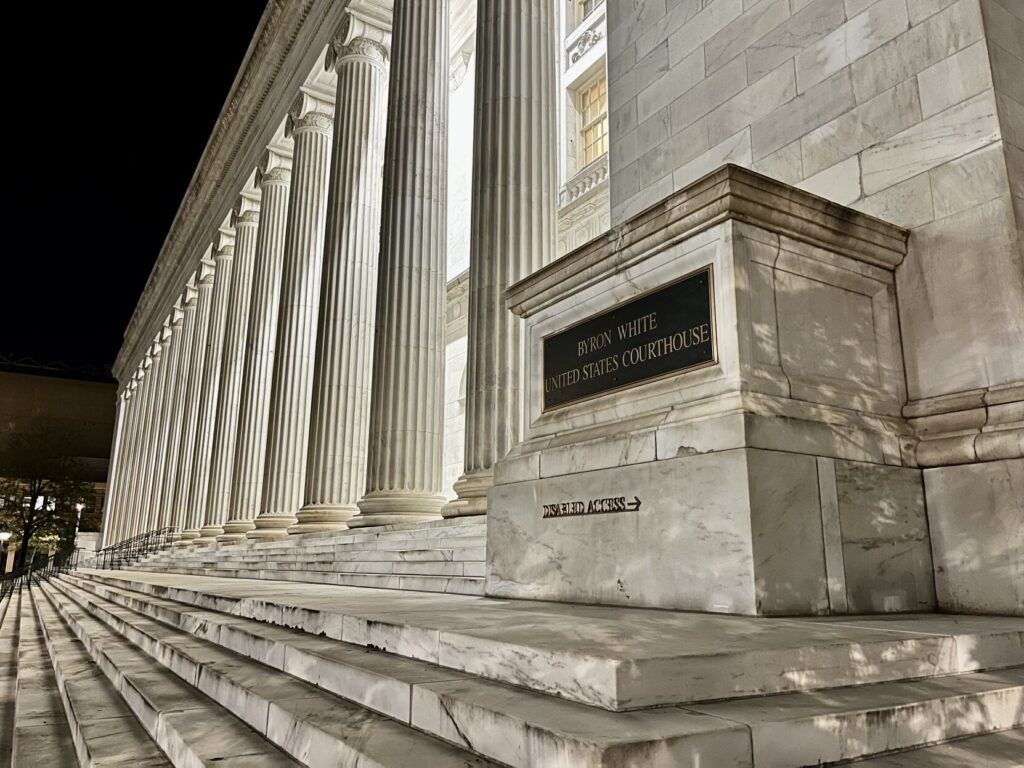
The Denver-based federal appeals court concluded last week that a Greeley police officer lacked reasonable suspicion to detain a man who was standing outside the door of a residence and not engaging in any indicators of criminal activity. A three-judge...

Copper Creek yearling wolf blamed for livestock death in Gunnison County
Marianne Goodland
marianne.goodland@coloradopolitics.com
Updated 10 hours ago
A heifer found dead in eastern Gunnison County on Nov. 22 was killed by one of the yearlings from the Copper Creek wolf pack, according to a rancher, who did not want to be identified. It’s the fourth livestock death...

‘Utterly no precedent’: Federal judge expresses concerns about Jeffco’s early appeal in jail death case
Michael Karlik
michael.karlik@coloradopolitics.com
Updated 8 hours ago
A federal judge shared his concerns on Monday about Jefferson County’s appeal of a routine procedural order in a constitutional rights case, which the plaintiffs argued could spawn appeal-related delays in countless lawsuits against the government. During a hearing, U.S....

Justice Hart’s absence continues, state Supreme Court hears oral arguments | COURT CRAWL
Michael Karlik
michael.karlik@coloradopolitics.com
Updated 13 hours ago
Welcome to Court Crawl, Colorado Politics’ roundup of news from the third branch of government. One member of the Colorado Supreme Court remains on an unusual leave of absence, plus the court heard oral arguments in eight more cases last...
Denver Art Museum gala honors treasured benefactors Kent and Vicki Logan | NONPROFIT REGISTER
Joanne Davidson Special to Colorado Politics
joanne-davidson-special-to-colorado-politics@coloradopolitics.com
Updated 13 hours ago
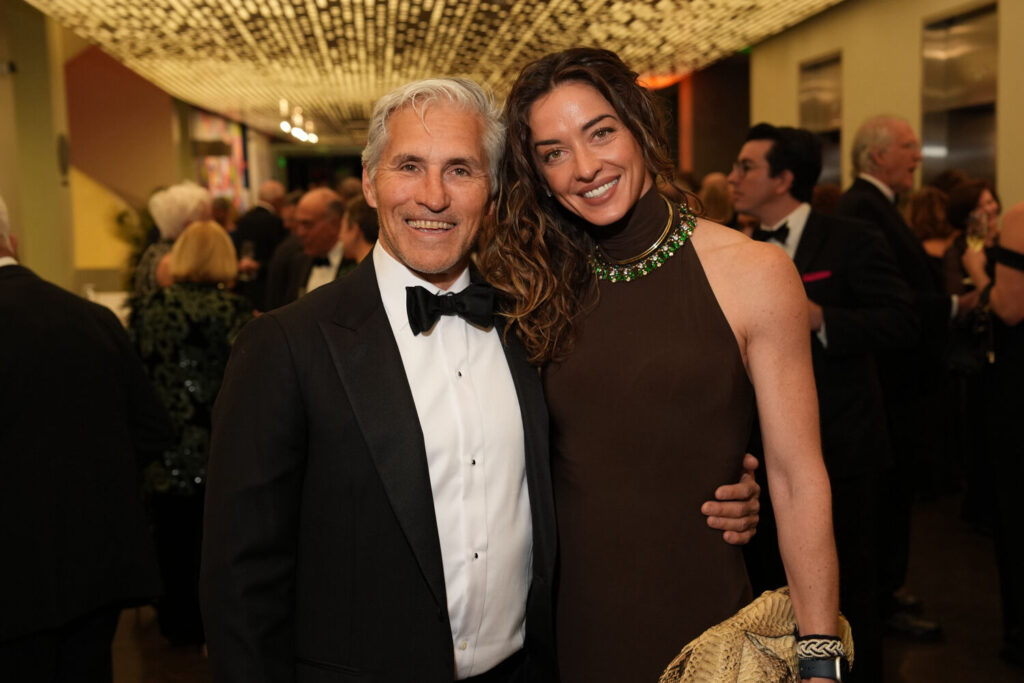
DENVER ART MUSEUM Denver News: Kent and Vicki Logan, who 25 years ago made the largest gift in the history of the Denver Art Museum’s modern and contemporary art department, were the honorees when the DAM hosted the 43rd edition of its...

The Colorado Lottery’s mega-bad idea | Sondermann
Eric Sonderemann
eric-sonderemann@coloradopolitics.com
Updated 16 hours ago
There are plenty of lousy, miserable, misguided whims out there. Then, every so often, you come across a notion so wrong-headed that it qualifies as phenomenally bad. Or, in words the marketing whizzes at the Colorado Lottery might understand, let’s...
PREV
PREVIOUS

Fountain resumes drawing from contaminated aquifer; some residents wary of filtered water
COLORADO SPRINGS – For the first time in 2½ years, water drawn from a contaminated aquifer in southern El Paso County soon will be flowing from Fountain residents’ taps after being filtered to remove dangerous chemicals. The city plans to start using an Air Force-supplied filter June 18 that can remove perfluorinated compounds – a […]

Arrests for illegal border crossings top 50,000 in May
NEW YORK – U.S. Border Patrol agents made 51,912 arrests in May for illegal crossings, the third month in a row the number has topped 50,000 amid a new “zero tolerance” policy and agents separating families caught crossing illegally. The Trump administration – like previous administrations – uses the arrest numbers as the best gauge […]