

Tolls on Colorado interstates aren’t in legislators’ plans, but they’re still in the works
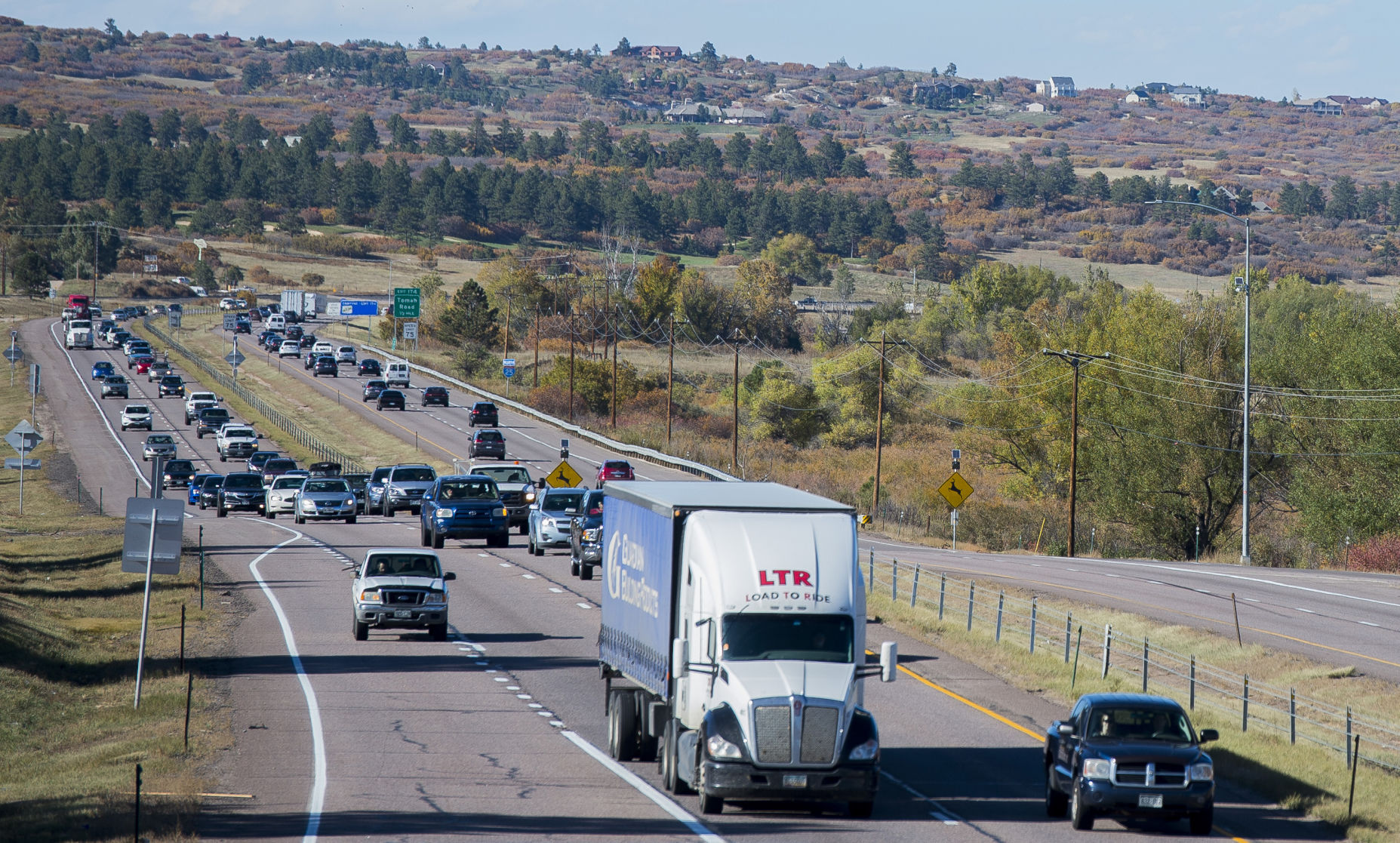
A bill last year to plow $300 million a year in Colorado from a sales tax bogged down over tolls. Legislation this year would take that much money out of the state budget, and it steers around the sticky politics of toll roads.
“If we ask voters to let us use $300 million of taxpayer money from the state budget to build new roads and lay new asphalt, we don’t feel we need to ask them to pay a tax again to use it,” said Sen. Randy Baumgardner, R-Hot Sulphur Springs, who chairs the Senate Transportation Committee.
He also is a co-sponsor of Senate Bill 1, which will get its first hearing before his committee next Tuesday afternoon.
But just because lawmakers don’t ask for a toll, that doesn’t mean there won’t be one.
“Express lanes” are included as an option to help pay for the state’s most important highway expansions for the foreseeable future.
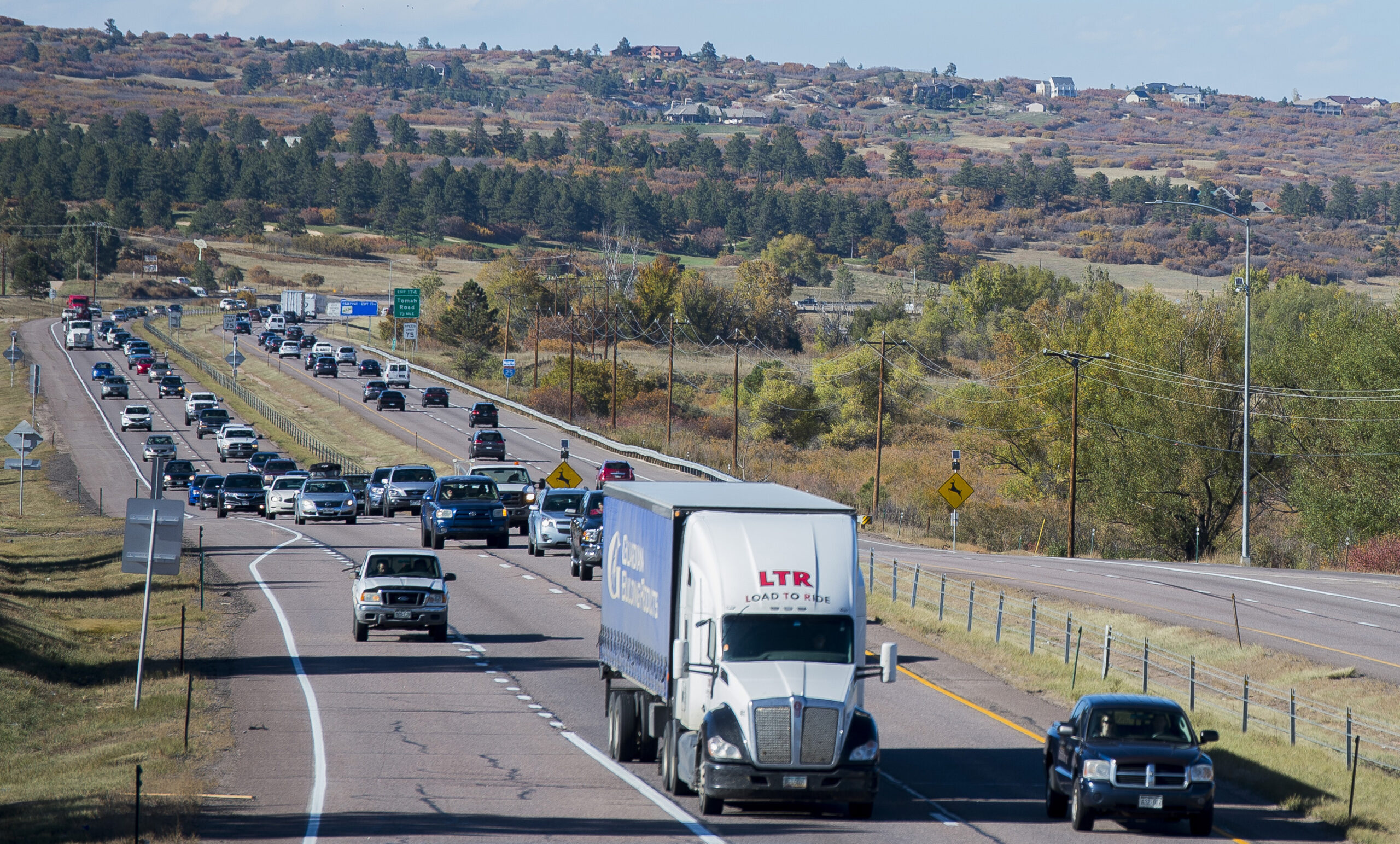
Express lanes are already part of the I-70 North expansion from Denver to Fort Collins, as well as I-70. Within a few months, the environmental assessment for the 17-mile gap from Monument to Castle Rock will be complete, and the extra lane in each direction is planned as an express lane.
Amy Ford, the spokeswoman for the Colorado Department of Transportation, said the agency’s managed-lanes policy says that express lanes are considered in every major expansion.
“The idea of the express lane is that it’s something that we can manage over time, so that we always at least have one lane that moves reliably at reliable speeds,” she said. “Of course you use the tolling, the pricing, as a way of doing that.”
The state truckers’ association thinks toll lanes are a ruse that only benefit wealthier drivers and never raise enough revenue to cover their cost.
“Managed lanes are like a new form of trickle down economics,” said Greg Fulton, president of the Colorado Motor Carriers Association.
Most drivers can’t or won’t pay the toll for what Fulton and other tolling opponents call “Lexus lanes.”
“While higher income individuals are afforded the luxury of significantly reducing their travel time, others with lower means, who cannot afford to be in that lane – or are not in a position to be in a three-person carpool or travel by transit) – are stuck in the other lanes hoping for the spillover or trickle-down benefit from others using the toll lanes. “
With a couple of exceptions in Colorado, tolling isn’t the Northeastern-style turnpikes where drivers are forced to pay in order to go. Colorado adds on an extra “managed” lane where drivers can scoot over, speed up and pay up. Ideally, the lane pays for itself with tolls and travelers in the free lanes have fewer vehicles in their path. The price to use the I-70 Mountain Express, the toll lane that accompanies two free lanes costs from $3 to $40 depending on how far your go.
Toll, however, is a four-letter word to nearly every politician and most drivers, but perhaps less so if they consider all the options.
Most business and civic supporters of a transportation fix says it’s a necessary, fiscally responsible part of a way to pay for transportation. If a few people are willing to pay to get out of the way, let them, they say. And if you’re in a hurry, where time is more valuable than a few dollars, it’s a nice option to have.
The Colorado Springs Chamber and EDC worked tirelessly to widen the gap in El Paso and Douglas counties, and the potential for express lanes was one of the ways it got moved up from about 10 years out to where it is now, practically resting on the drawing board awaiting $350 million to build it.
“It’s not just the congestion on that stretch, but the lack of reliability,” said Rachel Beck, government affairs manager with the Colorado Springs Chamber of Commerce and EDC. “Every time there’s an accident, there’s no way to get around it.”
Where the lanes cause the most problems is in political messaging. Toll roads are seldom appreciated for steering public costs to the actual users. An ABC-Washington Post poll last year found that Americans were 2-to-1 against a Trump administration proposal to mend the nation’s infrastructure with privatization and tolls.
But the Colorado Springs chamber did some internal polling on tolls, and found 56 percent to 44 percent support, if it meant getting traffic moving, Beck said.
The chamber had apprehensions about the failed bipartisan bill last year that would have asked voters to approve a sales tax for transportation. That bill was called a wobbly request to voters, made all the more wobbly by the inclusion of tolling, because it would be one more reason for voters who dislike new taxes to dislike this one even more.
This year’s Senate Bill 1 would repay bonds out of tax money already in the state budget.
If the referred ballot measure gets out of the statehouse, voters would be asked to let the state borrow the money that’s repaid with their taxes.
“The North I-25 project is an express-lane project, and the community in the northern Colorado region is supportive of it,” said Barbara Kirkmeyer, a Weld County commissioner and chair of the North I-25 Coalition. “Managed lanes are an important tool to assure a reliable trip, to fund large projects like North I-25 and to allow growth to pay its own way.”
Kelly Brough, president and CEO of the Denver Metro Chamber of Commerce, said, “Last year CDOT developed a very prescriptive list of requirements for the unique situations in which tolls could be used. We were supportive of that approach and would continue to be supportive of using those criteria to determine when tolling could be implemented.”


Trump administration seeks to roll back protections for imperiled species | OUT WEST ROUNDUP
The Associated Press
the-associated-press@coloradopolitics.com
Updated 3 days ago
MONTANA Endangered species rollback sought BILLINGS — President Donald Trump’s administration moved on Nov. 19 to roll back protections for imperiled species and the places they live, reviving a suite of changes to Endangered Species Act regulations from the Republican’s...
Clash of the titans: Democratic race for governor pits two candidates similar in focus, but very different in style | Vince Bzdek
Vince Bzdek
vince.bzdek@gazette.com
Updated 5 hours ago
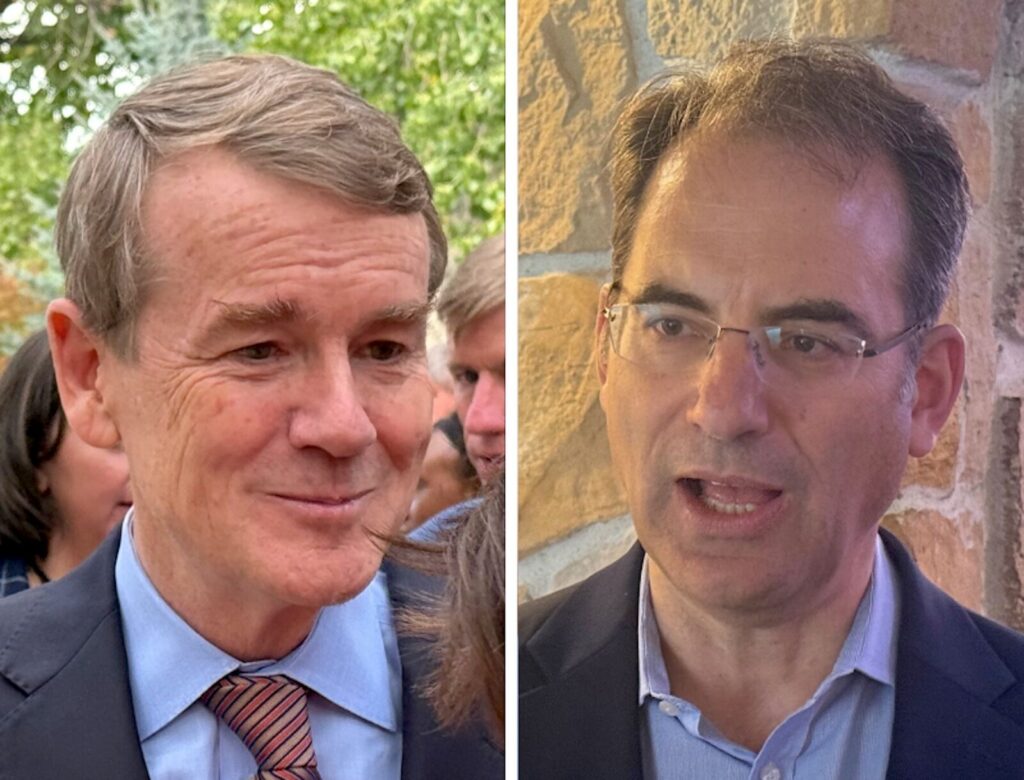
By Vince Bzdek The race for governor is shaping up to be a clash of Democratic titans, U.S. Sen. Michael Bennet and Attorney General Phil Weiser. They are two of Colorado’s highest profile politicians with deep track records who...

Calendar Dec. 8-14
Rachael Wright
rachael.wright@coloradopolitics.com
Updated 4 days ago
CoPo’s weekly political calendar will help you find political and public-policy events throughout Colorado. It includes candidate and issue campaign events, public policy meetings, court hearings, state and local party conventions, assemblies, debates, rallies, parades, speaking engagements, traveling dignitary appearances,...
GOP chair candidates circle Benson, statehouse candidate alleges SOS voter fraud | A LOOK BACK
Rachael Wright
rachael.wright@coloradopolitics.com
Updated 4 days ago
Thirty-Five Years Ago This Week: Although Colorado Republican Party Chairman Bruce Benson had told one of his predecessors that he hadn’t yet made up his mind as to whether he’d run for a third term, party insiders had already begun...
Dear Abby: A better answer to your question | SONDERMANN
Eric Sondermann
eric-sondermann@coloradopolitics.com
Updated 2 days ago
It was the beginning of October. I had been invited to speak to a class on political journalism at Colorado College, my old alma mater. The class was taught by none other than Vince Bzdek, the editor-in-chief of this paper...

Federal judge declines to order Denver to let police critic apply for review board
Michael Karlik
michael.karlik@coloradopolitics.com
Updated 2 hours ago
A federal judge declined on Friday to order that Denver permit a longtime police critic to apply to join the board tasked with reviewing officers’ use of force. Regan Benson sought to become one of the two community members on...
Flags lowered, colors raised: Colorado leaders and friends celebrate Sen. Faith Winter’s life
Marianne Goodland
marianne.goodland@coloradopolitics.com
Updated 2 days ago
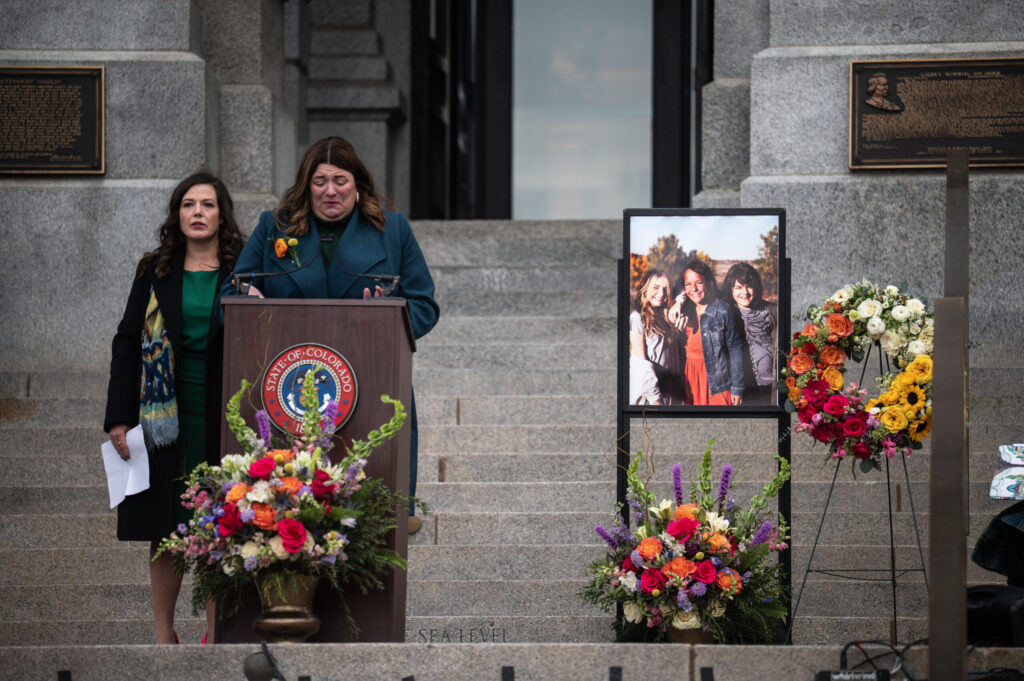
It was the colors that stood out as hundreds braved the cold on Friday to celebrate the life of Sen. Faith Winter, who died in a two-car crash on Nov. 26. Flags at the state Capitol flew at half-staff at...
Colorado Supreme Court to hear case on ballot measure disclosure requirements
Marissa Ventrelli
marissa.ventrelli@coloradopolitics.com
Updated 2 days ago
The Colorado Supreme Court has agreed to hear a case challenging whether the state can require ballot measure committees to disclose the names of their registered agents in election communications. The case stems from a complaint filed during the 2020...
Divided 10th Circuit orders pretrial release of defendant facing drug charges
Michael Karlik
michael.karlik@coloradopolitics.com
Updated 2 days ago
The Denver-based federal appeals court overturned a judge’s order keeping a defendant in custody pending trial on Friday, ruling 2-1 that she was entitled to release under the law. Erika Esmeralda Garcia stands accused of two charges related to the...
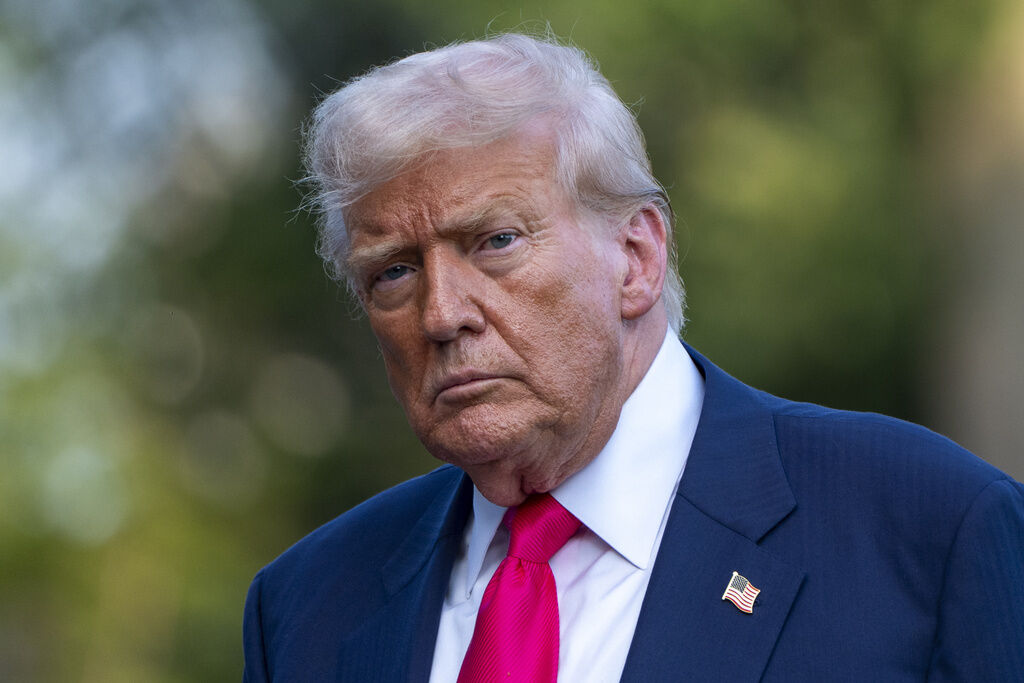
Trump finally gets his peace prize as FIFA hands him inaugural award at World Cup draw
Christian Datoc and Mabinty Quarshie, Washington Examiner
christian.datoc.and.mabinty.quarshie.washington.examiner@gazetteedit.wpenginepowered.com
Updated 2 days ago
President Donald Trump has long said he is unbothered by being snubbed for a Nobel Peace Prize. However, that did not stop his friend and FIFA President Gianni Infantino from handing him an award and a medal on Friday, seemingly created just...
PREV
PREVIOUS

Environment Colorado paper backs bill to aid renewable energy storage
A bipartisan bill this session would allow Coloradans to install storage systems to collect energy, connect it to the grid and cut their outside sources of juice. Senate Bill 9, cosponsored by Sen. Kevin Priola, R-Henderson, and Rep, Steve Fenberg, D-Boulder, This bill would have the Public Utilities Commission to adopt rules for the use […]
Mountains yes, Ellis Island no: Some US parks open, some not
ROCKY MOUNTAIN NATIONAL PARK – The snowy mountains and frozen lakes of Rocky Mountain National Park are still accessible to visitors, despite the federal government shutdown. But across the country in New York, the nation’s most famous monuments to immigration – the Statue of Liberty and Ellis Island – were closed Saturday. The National Park […]