

In battle pitting religious freedom against discrimination, a small surprise victory
Colorado House Republicans pitched a religious liberty bill last Wednesday to the Democratic-controlled State Affairs committee. It was the same kind of bill that has stirred hornets nest-like national protests in other states for fear that religious liberty might translate on the ground as discrimination.
Republicans knew the bill, HB 1013, would die in committee, and it did, on a 6-3 party line vote. Earlier versions have ended the same way the last two years.
But the bill sponsors – Rep. Dave Williams, R-Colorado Springs, and Steve Humphrey, R-Eaton – hoped the bill would advance the cause by demonstrating their commitment to it and by building additional support with a well-made case laid out in the public square.
“I think it worked out well,” Williams told The Colorado Statesman. “The crowd wasn’t as big at the hearing last year. It was packed this time. We also had great testimony this time, better expert witnesses and better public feedback. The point is, we’re going to keep the pressure up. We’re going to demonstrate that the Democrats are wrong on this issue and we’re going to keep bringing it to them until they see the light.”
But the movement for increased religious liberty protections has grown in parallel with increased recognition of gay rights and as women’s rights to full reproductive health care, including abortion, have been pared back across the country.
“Right to Discriminate? Not with a House Dem Majority,” read the statement put out by House Democrats Wednesday night after the bill was killed.
By that time, messaging against it had gone on for six hours at the Capitol – starting with a news conference hosted by a coalition that included gay rights and women’s groups, faith leaders and business organizations. Speakers included lawmakers, Denver District Attorney Beth McCann and Denver Metro Chamber of Commerce President Kelly Brough.
The committee hearing for the bill also provided a stage for Democrats to dominate.
Indeed, two Democrats joined the committee just for the hearing. Joe Salazar, a Latino, Native American champion of minority rights, and Leslie Herod, who is black and gay, were allowed to level questions during testimony but not cast votes on the bill. The effect was that the Democrats had expanded their super majority on the committee.
In fact it was worse than that for the minority. The bill sponsors are both also members of the State Affairs committee and so they sat with the witnesses, letting them do the talking, as is typical. But that left Rep. Tim Leonard, R-Evergreen, alone to query the witnesses and parry with the Democrats. The super majority had turned into an extra- super majority.
Leonard laughed about it later. “Eight against one,” he said shaking his head.
It seemed like terrible political strategy.
But something unexpected happened during the hearing that lifted the issue out of the realm of strategy and messaging, if even just a little bit. The four-plus hours of testimony and questioning and debate was earnest and genuine and it resulted in meaningful exchanges.
Dignitary harm
An hour in, Rep. Susan Lontine, D-Denver, began questioning Theresa Lynn Sidebotham, an expert witness called in support of the bill and the founder of Telios Law in Monument, which specializes in representing religious clients.
Lontine asked about how the law might infringe on reproductive health care and offered a hypothetical. If a Catholic pharmacist refuses to fill a prescription for birth control in Denver, the customer can go somewhere else.
Lontine is from Florida and speaks with a slight drawl.
“But what if I live in a very small town where there’s only one pharmacy and the pharmacist is Catholic and won’t fill my prescription? Is there a claim that can be made for having been denied my health care?”
Isn’t there a government interest in protecting the public that comes into play in such a case, she wanted to know.
“You’ve raised a really beautiful example of how this works out and why it’s a balancing test,” said Sidebotham.
According to the bio posted at her firm’s website, Sidebotham lived abroad for many years, first as a missionary kid and then as a military wife, at one point running a school for international students out of her home in Sumatra.
“In Denver you would make your choice in commerce and take your dollars elsewhere and you get your needs met,” she said. “So in a case like that, the analysis is likely to be that the Catholic pharmacist has the defense of free exercise.
“But you can see how that interest shifts if you move out to the rural area where there’s no other pharmacy,” Sidebotham continued. “The interest of the government becomes progressively more compelling. The government is thinking, ‘OK, women have health care needs. If they’re not being met here, what’s the burden on them?’ So the balancing test shifts and you may get a completely different outcome.”
Lontine, thinking out loud, said she felt that Denver customers, like their rural counterparts, actually shouldn’t be forced to go elsewhere. “I don’t see how that serves the public interest. Even though I can go to another pharmacy in Denver, I shouldn’t have to,” she said.
“Yes, you’re describing well the dignitary harm – the fact that you can’t get access to services you want. Obviously there is a harm to you there,” said Sidebotham. “But from the pharmacist’s perspective on this, what you’re asking him to do is an attack against human life. So you can see the dignitary harm to the pharmacist is quite a bit greater because the pharmacist would feel he had blood on his hands if he filled the prescription.
Lontine looked forward, thinking. Sidebotham then steered the exchange back to the proposal.
“So what this bill does is, it lets the pharmacist make his argument … The point of the balancing test is to get everyone’s interests into the mix and weigh them out. It doesn’t automatically shut one view or the other out of the public square.
“There are hard questions around conscience,” she said, “but I think these are important questions to ask in a pluralistic society.”
The example had the feel of real life. The back and forth felt like real talk. Concepts like “dignitary harm” and the “government’s compelling interest” were brought to life and applied in support of players on both sides of the issue. Practical questions spiraled out. How far or inconvenient to travel would the space between pharmacies have to be for the government’s compelling interest to kick in for consumers? And how close and conveniently spaced would they have to be for the pharmacist’s right to free exercise to prevail?
Fireworks
“First Amendment law is complex,” said committee Chair Mike Foote, D-Lafayette, in his closing remarks. “Interests are compelling on all sides. I think this bill upsets the balance in a way I can not approve of.”
Foote noted that the sponsors had introduced the bill with no significant change three years in a row. “I haven’t seen any effort to address concerns,” he said.
Melissa Hart, professor of law at University of Colorado, enumerated some of the concerns. She said that the way the bill was written suggests it seeks to expand license to discriminate above standards set by the federal religious freedom act.
“The term ‘exercise of religion’ here is defined as ‘any act …’ The room for interpretation is enormous,” she said.
Freshman Rep. Edie Hooton, D-Boulder, said she had gone into the hearing fearing the worst. “Oh no, it’s going to be anger and fireworks and just what everyone warned me about.
“But that didn’t happen,” she said. “The Sponsors and their supporters presented a truly respectful interpretation of their views about how the people they were representing feared injury under the law – and they gave those concerns voice.
Titanic
As the hearing wound down, Humphrey, Williams and Leonard introduced a series of amendments. Democrats voted them all down before voting the bill down. Foote called for a short recess before debate on the next bill began. It had been a long slog. There was a lot to think about. Everyone looked exhausted.
Veteran lawmaker Paul Rosenthal, a gay Denver Democrat and sponsor of a bill that was listed next on the committee docket, ushered freshman Williams out of the building into the moonlight and the cold mountain air.
“Take a breath,” he said. “It feels good.”
They were grinning about the amendments. The Republicans had proposed them knowing the bill was going to be killed, tacking on perhaps another 20 minutes to the proceedings.
Rosenthal has a deep uproarious laugh that was echoing off the state’s stone buildings.
“They were pinning the tail on the Titanic!” he said, slapping Williams on the shoulder. Williams let out a big laugh too.


Trump administration seeks to roll back protections for imperiled species | OUT WEST ROUNDUP
The Associated Press
the-associated-press@coloradopolitics.com
Updated 3 days ago
MONTANA Endangered species rollback sought BILLINGS — President Donald Trump’s administration moved on Nov. 19 to roll back protections for imperiled species and the places they live, reviving a suite of changes to Endangered Species Act regulations from the Republican’s...
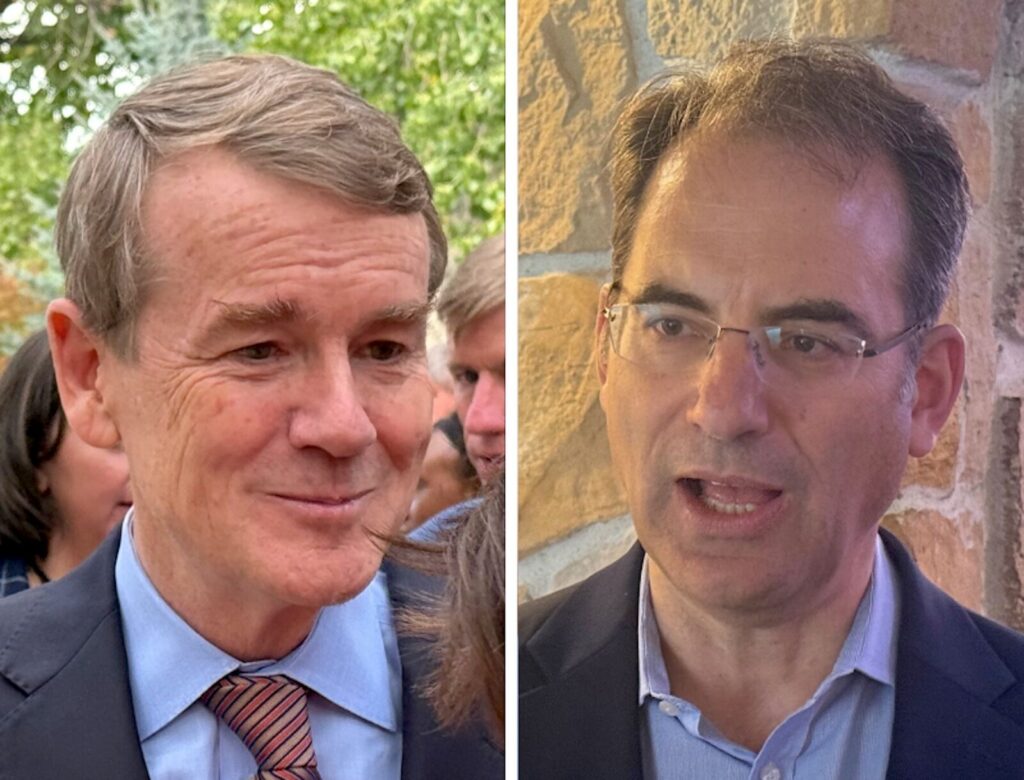
Clash of the titans: Democratic race for governor pits two candidates similar in focus, but very different in style | Vince Bzdek
Vince Bzdek
vince.bzdek@gazette.com
Updated 3 hours ago
By Vince Bzdek The race for governor is shaping up to be a clash of Democratic titans, U.S. Sen. Michael Bennet and Attorney General Phil Weiser. They are two of Colorado’s highest profile politicians with deep track records who...

Calendar Dec. 8-14
Rachael Wright
rachael.wright@coloradopolitics.com
Updated 4 days ago
CoPo’s weekly political calendar will help you find political and public-policy events throughout Colorado. It includes candidate and issue campaign events, public policy meetings, court hearings, state and local party conventions, assemblies, debates, rallies, parades, speaking engagements, traveling dignitary appearances,...
GOP chair candidates circle Benson, statehouse candidate alleges SOS voter fraud | A LOOK BACK
Rachael Wright
rachael.wright@coloradopolitics.com
Updated 4 days ago
Thirty-Five Years Ago This Week: Although Colorado Republican Party Chairman Bruce Benson had told one of his predecessors that he hadn’t yet made up his mind as to whether he’d run for a third term, party insiders had already begun...
Dear Abby: A better answer to your question | SONDERMANN
Eric Sondermann
eric-sondermann@coloradopolitics.com
Updated 2 days ago
It was the beginning of October. I had been invited to speak to a class on political journalism at Colorado College, my old alma mater. The class was taught by none other than Vince Bzdek, the editor-in-chief of this paper...
Federal judge declines to order Denver to let police critic apply for review board
Michael Karlik
michael.karlik@coloradopolitics.com
Updated 3 minutes ago
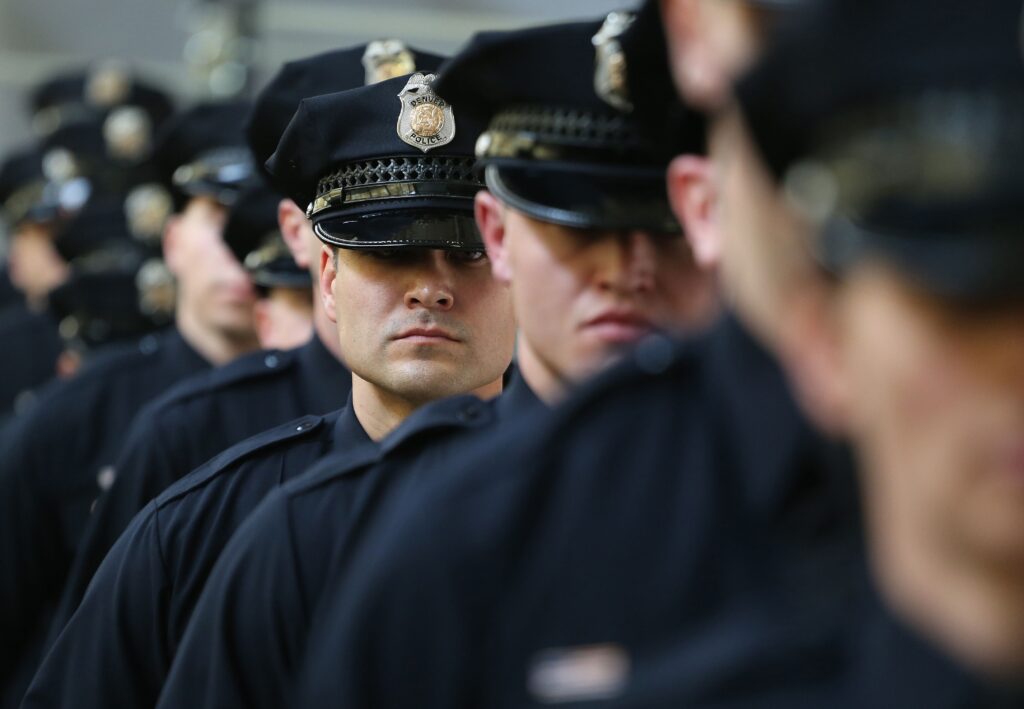
A federal judge declined on Friday to order that Denver permit a longtime police critic to apply to join the board tasked with reviewing officers’ use of force. Regan Benson sought to become one of the two community members on...
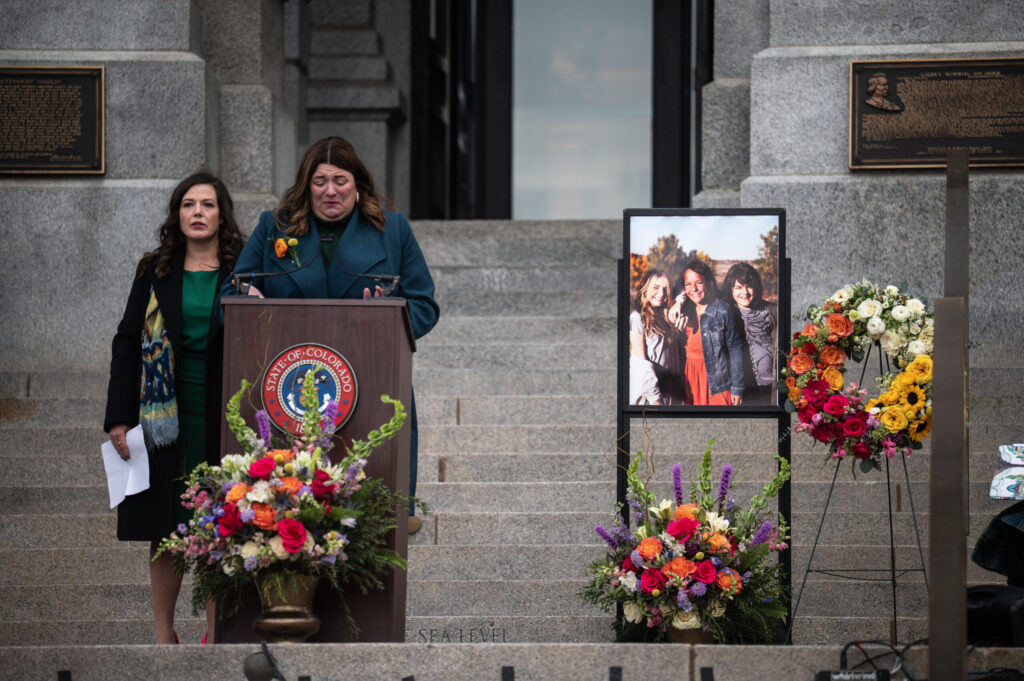
Flags lowered, colors raised: Colorado leaders and friends celebrate Sen. Faith Winter’s life
Marianne Goodland
marianne.goodland@coloradopolitics.com
Updated 2 days ago
It was the colors that stood out as hundreds braved the cold on Friday to celebrate the life of Sen. Faith Winter, who died in a two-car crash on Nov. 26. Flags at the state Capitol flew at half-staff at...
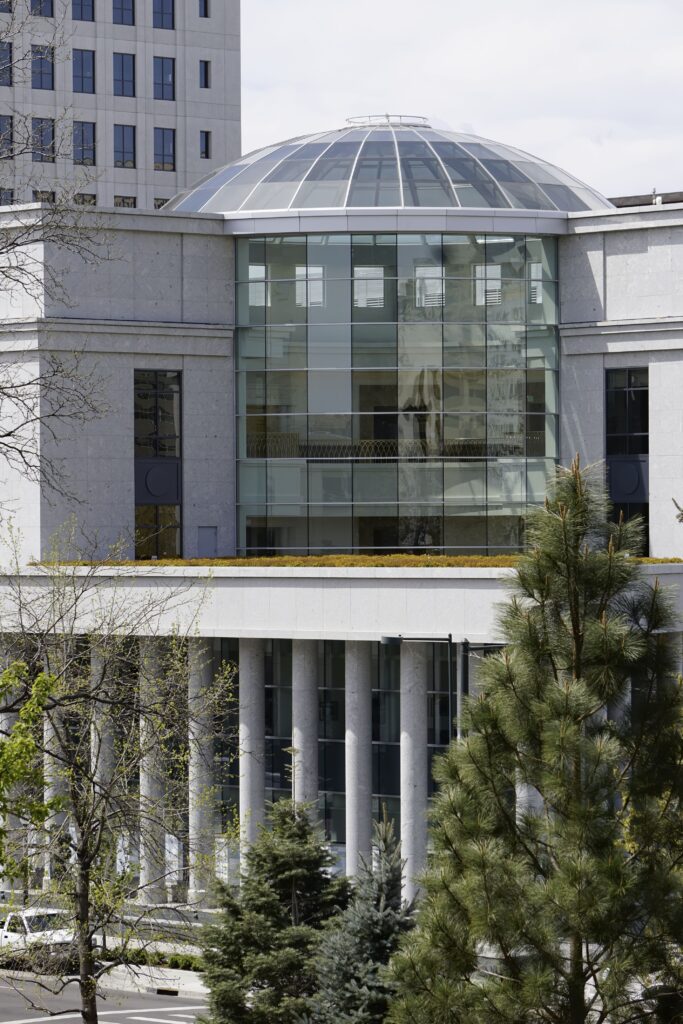
Colorado Supreme Court to hear case on ballot measure disclosure requirements
Marissa Ventrelli
marissa.ventrelli@coloradopolitics.com
Updated 2 days ago
The Colorado Supreme Court has agreed to hear a case challenging whether the state can require ballot measure committees to disclose the names of their registered agents in election communications. The case stems from a complaint filed during the 2020...
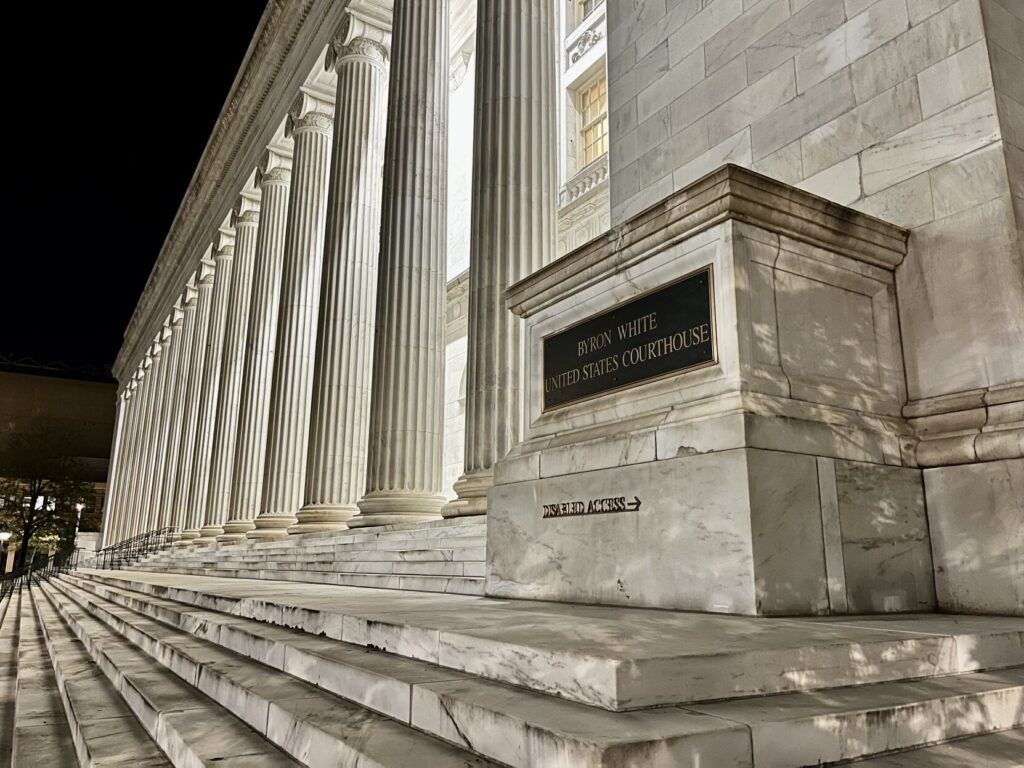
Divided 10th Circuit orders pretrial release of defendant facing drug charges
Michael Karlik
michael.karlik@coloradopolitics.com
Updated 2 days ago
The Denver-based federal appeals court overturned a judge’s order keeping a defendant in custody pending trial on Friday, ruling 2-1 that she was entitled to release under the law. Erika Esmeralda Garcia stands accused of two charges related to the...
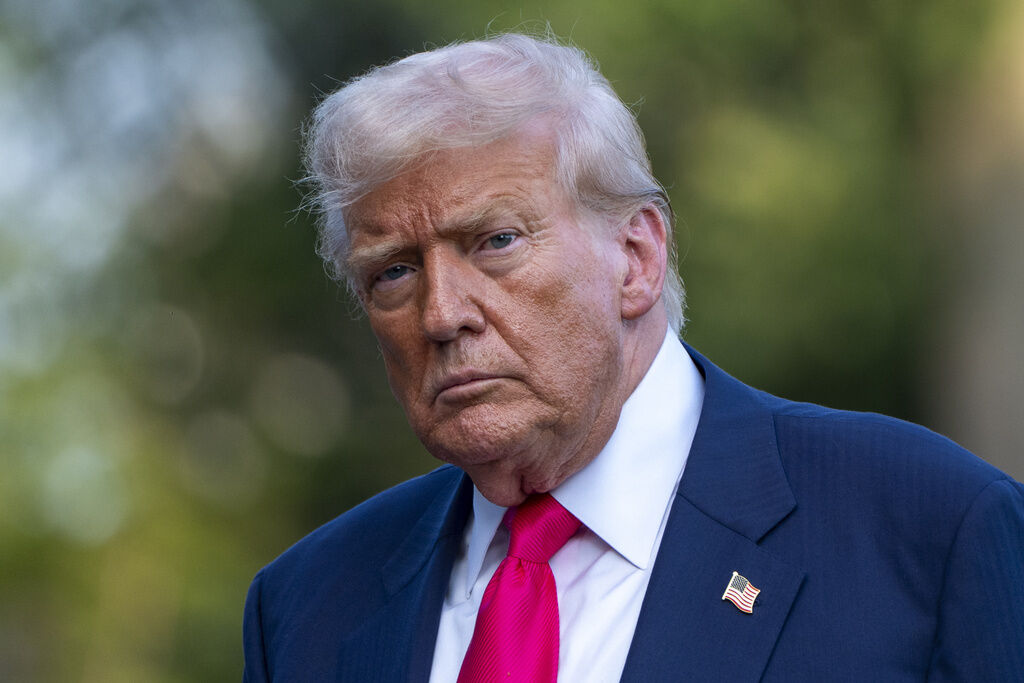
Trump finally gets his peace prize as FIFA hands him inaugural award at World Cup draw
Christian Datoc and Mabinty Quarshie, Washington Examiner
christian.datoc.and.mabinty.quarshie.washington.examiner@gazetteedit.wpenginepowered.com
Updated 2 days ago
President Donald Trump has long said he is unbothered by being snubbed for a Nobel Peace Prize. However, that did not stop his friend and FIFA President Gianni Infantino from handing him an award and a medal on Friday, seemingly created just...