

? Transportation funding plan dies on unusual partisan vote
On a strictly party line vote, the Colorado Legislative Council Committee killed a proposed bill that called for voter approval of $3.5 billion in bonds and the transfer of state sales tax revenue to help fund transportation projects across the state.
But to the layperson, the opposite of what would be expected to traditionally occur when it comes to spending tax dollars took place.
Nine Democrats voted against the proposal and nine Republicans voted to move it forward on Friday, Oct. 14, which prevents the measure from proceeding. Usually, Republicans will oppose such spending measures and Democrats will be the ones in favor.
State Sen. Randy Baumgardner, R-Hot Sulphur Springs, chairman of the Transportation Legislation Review Committee, presented the proposal to the Legislative Council and noted the plan had progressed further this year than in the last three years.
Democrats, including House Speaker Dickey Lee Hullinghorst of Gunbarrel, chairwoman of the Legislative Council Committee, felt the bill went too far in requiring the Colorado Transportation Commission to submit a ballot measure to states voters in 2017 to approve the issuance of $3.5 billion in Transportation Revenue Anticipation Notes, or TRANs bonds, with a maximum repayment of $5.5 billion. The money would help fund 42 statewide transportation projects, Baumgardner said.
The proposed bill would have also called for the transfer of 5 percent of state sales tax revenue to the highway users tax fund and another 1 percent to the state capital reserve fund to help pay for transportation projects, Baumgardner said. The bill would not have called for any increase in taxes.
“My concern is we would be shirking our responsibilities to refer ballot measures to the voters,” said Democratic State Rep. Lois Court of Denver. “This would set an implicit policy of having the Legislature require another authority to make that move, and it seems to open the possibility that we can ask just about any entity to take the responsibility of for referring a tax question to voters.”
“If we believe this should go to the voters, then come through the Legislature and get the two-thirds vote needed to refer it to the ballot,” she added later.
Baumgardner responded that “Any entity can place just about anything on the ballot any time they want to” through the citizen initiative and petition process.
“We understand this may not be the way the bill ends up,” he added. “And it’s not the be all and end all for transportation funding, but it’s a step forward when we continue to hear that Colorado falls $1 billion behind every year in transportation funding. We think it’s time to ask the legislature to try to fix some problems with transportation.”
State Sen. Rollie Heath, D-Boulder, said the bill was seeking an “astronomical change and would basically commit the state to pay $5.5 billion over the next 20 years with no tax increase.”
“So that amount would have to come out of other areas of the general fund,” Heath said, such as education, which is already underfunded by nearly a billion dollars, or other high-priority state services.
Heath also objected to a provision that would have altered the last three years of a transportation funding bill passed on 1999. He said that was in an economic boom, when the state cut taxes. Now, lower revenue has caused a sharp drop in funds for education and other key areas, Heath added.
Democrats also voted against the proposal because such a major reallocation of state resources was beyond the purview of an interim committee devoted solely to transportation.
“This is putting transportation (as the top) priority over other important core issues like education,” said Hullinghorst. “The TLRC is attempting to set priorities that properly should be addressed by the Joint Budget Committee and the finance committees and appropriations committees of the Senate and House.”
“We all know there’s a tremendous need for transportation funding, but there’s also a need for more funding for higher education, K-12, mental health, you name it,” said Heath.
State Rep. Brian DelGrosso, R-Loveland, argued that the Transportation Legislation Review Committee’s charge “to give guidance and direction to the Colorado Department of Transportation in the development of a statewide transportation system, and provide legislative oversight of that development” was exactly what the bill proposed.
“This entire bill gives CDOT that direction,” he said. “We can argue that we don’t like where the money might come from, but we’re not supposed to debate the merits of that in this committee. We’re only to consider if it fits under the charge of the committee and it clearly does that.”
State Sen. Matt Jones, D-Louisville, called the measure “an Uber bill that would almost certainly raise the ‘negative factor’,” the ongoing shortfall of K-12 funding over the last several years.
State Rep. Jovan Melton, D-Aurora, served on the Transportation Legislation Revenue Committee and said the bill did not come out of that committee with a wide consensus.
“I believe it probably does go beyond what the scope of the committee does,” he said. “It does direct CDOT, but the funding sources are far beyond a transportation matter and the committee did not touch on that in-depth.”
Baumgardner defended the bill as falling under the purview of his committee, “And we take general fund money and move it around every year,” he added.
“We’re not saying transportation is any more special than education, corrections or anything,” Baumgardner said. “But the cry from the people in Colorado is we want to fix transportation. This doesn’t fix it, but it is a step in the right direction. To stop it here and not actually let it have a chance is an injustice to the Transportation Legislative Review Committee.”
It is widely expected within Capitol circles that a House Democrat majority will reintroduce Hullinghorst’s hospital provider fee enterprise fund measure in the 2017 legislative session, freeing up general fund revenue that Democrats argue could be used for transportation funding. The bill is viewed as an alternative transportation funding measure that Republicans and Democrats have, and will likely continue to butt heads over.
Last year, the Republican majority in the Senate blocked Hullinghorst’s measure from succeeding. But if the Democratic Party takes the state Senate by winning enough seats in the general election, which is now widely viewed as a coin toss – that budget fix plan could achieve smooth sailing through the Legislature and onto the governor’s desk.
“The Democrat’s reaction to this bill [in Legislative Council] is just leftovers from the 2016 session,” one Republican Capitol source said, speaking on the condition of anonymity. “It’s their way or the highway – no pun intended.”

Clash of the titans: Democratic race for governor pits two candidates similar in focus, but very different in style | Vince Bzdek
Vince Bzdek
vince.bzdek@gazette.com
Updated 1 hour ago
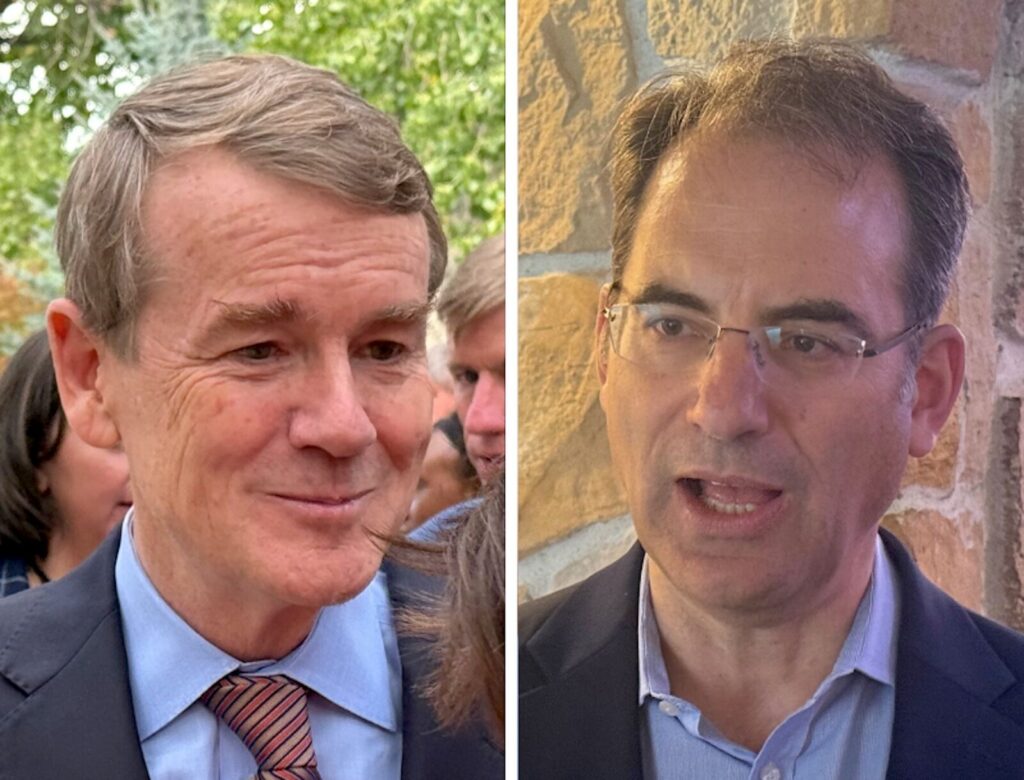
By Vince Bzdek The race for governor is shaping up to be a clash of Democratic titans, U.S. Sen. Michael Bennet and Attorney General Phil Weiser. They are two of Colorado’s highest profile politicians with deep track records who...
Calendar Dec. 8-14
Rachael Wright
rachael.wright@coloradopolitics.com
Updated 3 days ago
CoPo’s weekly political calendar will help you find political and public-policy events throughout Colorado. It includes candidate and issue campaign events, public policy meetings, court hearings, state and local party conventions, assemblies, debates, rallies, parades, speaking engagements, traveling dignitary appearances,...
GOP chair candidates circle Benson, statehouse candidate alleges SOS voter fraud | A LOOK BACK
Rachael Wright
rachael.wright@coloradopolitics.com
Updated 3 days ago
Thirty-Five Years Ago This Week: Although Colorado Republican Party Chairman Bruce Benson had told one of his predecessors that he hadn’t yet made up his mind as to whether he’d run for a third term, party insiders had already begun...
Dear Abby: A better answer to your question | SONDERMANN
Eric Sondermann
eric-sondermann@coloradopolitics.com
Updated 1 day ago
It was the beginning of October. I had been invited to speak to a class on political journalism at Colorado College, my old alma mater. The class was taught by none other than Vince Bzdek, the editor-in-chief of this paper...
Federal judge declines to order Denver to let police critic apply for review board
Michael Karlik
michael.karlik@coloradopolitics.com
Updated 5 hours ago
A federal judge declined on Friday to order that Denver permit a longtime police critic to apply to join the board tasked with reviewing officers’ use of force. Regan Benson sought to become one of the two community members on...
Flags lowered, colors raised: Colorado leaders and friends celebrate Sen. Faith Winter’s life
Marianne Goodland
marianne.goodland@coloradopolitics.com
Updated 1 day ago
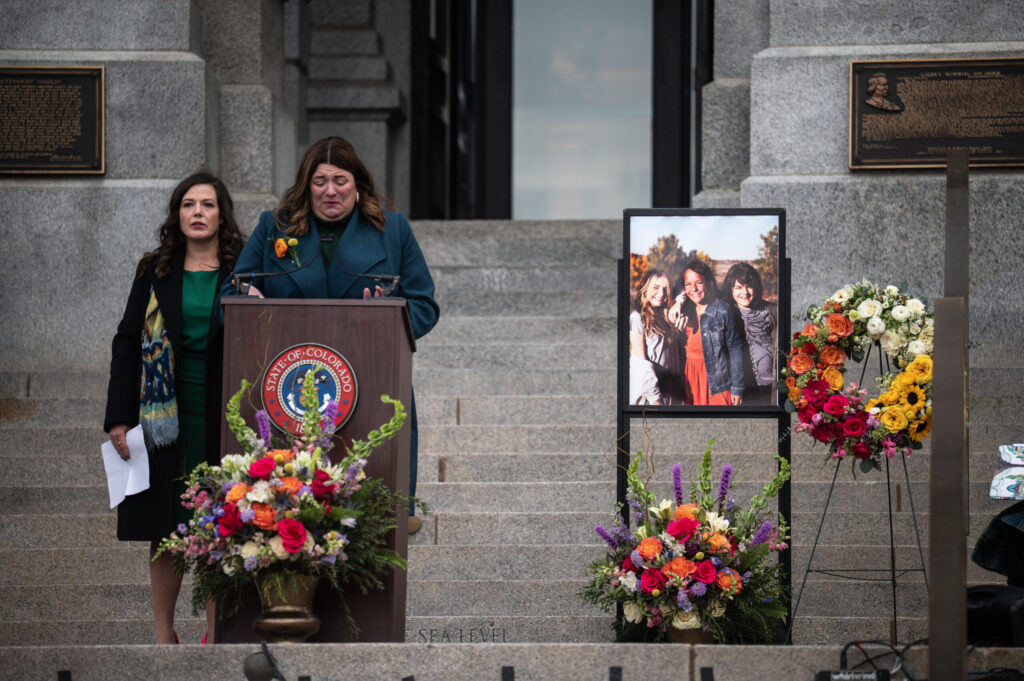
It was the colors that stood out as hundreds braved the cold on Friday to celebrate the life of Sen. Faith Winter, who died in a two-car crash on Nov. 26. Flags at the state Capitol flew at half-staff at...
Colorado Supreme Court to hear case on ballot measure disclosure requirements
Marissa Ventrelli
marissa.ventrelli@coloradopolitics.com
Updated 1 day ago
The Colorado Supreme Court has agreed to hear a case challenging whether the state can require ballot measure committees to disclose the names of their registered agents in election communications. The case stems from a complaint filed during the 2020...
Divided 10th Circuit orders pretrial release of defendant facing drug charges
Michael Karlik
michael.karlik@coloradopolitics.com
Updated 22 hours ago
The Denver-based federal appeals court overturned a judge’s order keeping a defendant in custody pending trial on Friday, ruling 2-1 that she was entitled to release under the law. Erika Esmeralda Garcia stands accused of two charges related to the...
Trump finally gets his peace prize as FIFA hands him inaugural award at World Cup draw
Christian Datoc and Mabinty Quarshie, Washington Examiner
christian.datoc.and.mabinty.quarshie.washington.examiner@gazetteedit.wpenginepowered.com
Updated 1 day ago
President Donald Trump has long said he is unbothered by being snubbed for a Nobel Peace Prize. However, that did not stop his friend and FIFA President Gianni Infantino from handing him an award and a medal on Friday, seemingly created just...
Outgoing CPW director Jeff Davis lands new role, same salary amid Colorado hiring freeze
Marianne Goodland
marianne.goodland@coloradopolitics.com
Updated 23 hours ago
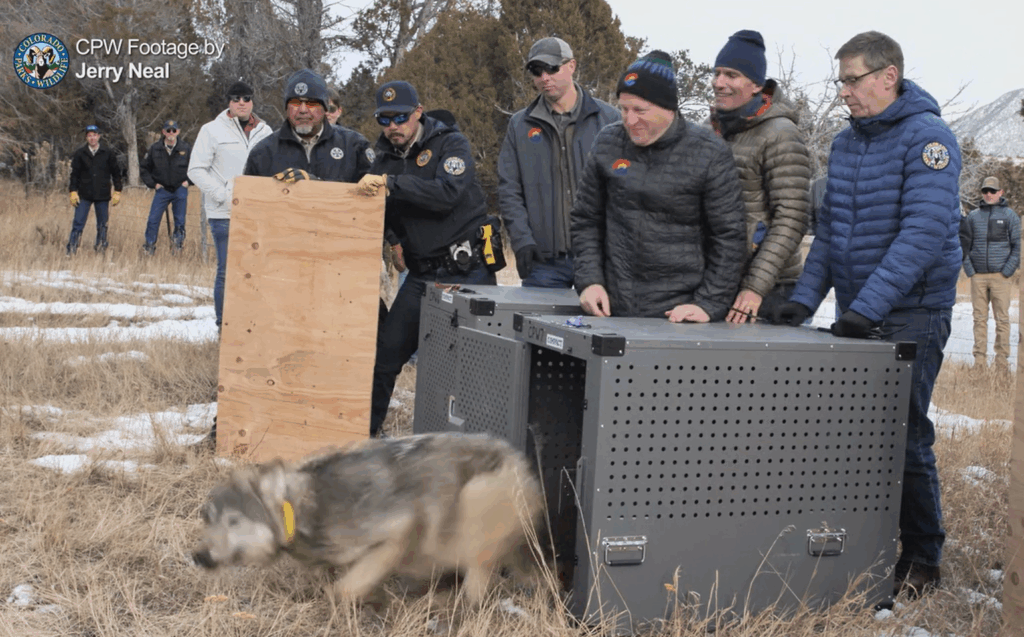
Jeff Davis, who resigned as director of Colorado Parks and Wildlife late last month, will continue to receive the same salary in his new role as a senior policy adviser to the Department of Natural Resources, according to the department....